
What is Structured Literacy?
An Evidence-Based Approach to Reading Instruction
As more schools adopt Science of Reading-aligned practices, Structured Literacy has become a central part of literacy instruction. This approach emphasizes explicit teaching, systematic skill development, and a deep understanding of how language works. Understanding Structured Literacy can help educators make informed decisions about instruction and student support.
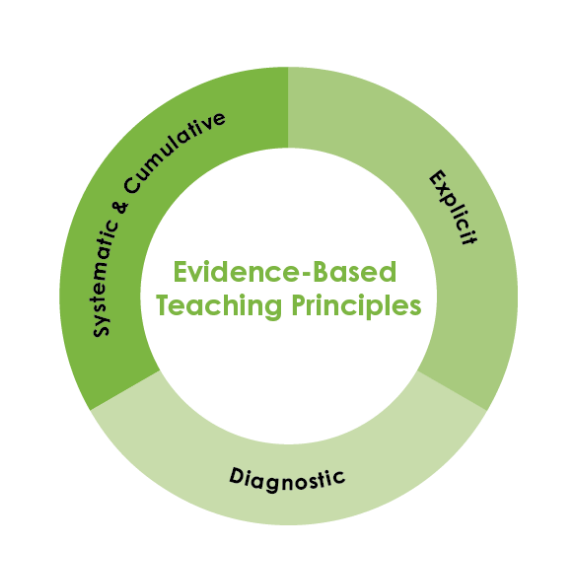
Many educators have heard the term Structured Literacy, but questions remain about what it means and how it differs from other approaches to reading instruction. Structured Literacy is an explicit, systematic, cumulative approach to literacy instruction that teaches the structure of language. It focuses on helping students understand how sounds, letters, syllables, words, and sentences work together to support reading, spelling, and writing.
Grounded in decades of reading research, Structured Literacy aligns closely with the Science of Reading and is widely recognized as an effective approach for supporting all learners, particularly students who struggle with reading or have dyslexia.
One of the defining characteristics of Structured Literacy is that instruction is direct and intentional.
Rather than expecting students to discover patterns independently, educators explicitly teach the concepts and skills students need to become successful readers and writers.
Instruction is:
- explicit
- systematic
- cumulative
- diagnostic
- responsive to student needs
Skills are introduced in a logical sequence, moving from simpler concepts to more complex applications while continually reviewing previously taught material.
For example, when teaching vowel teams, a teacher first ensures that students have mastered individual letter sounds and basic phonics patterns. New concepts build upon existing knowledge, allowing students to develop a connected understanding of how written language works.
Learn how explicit, systematic literacy instruction supports reading success for all students and is especially beneficial for students with dyslexia.
Phonology
Students learn to recognize and manipulate the sounds of spoken language, including phonological awareness and phonemic awareness.
Sound-Symbol Correspondences
Students learn how letters and letter combinations represent speech sounds.
Syllables
Students learn syllable types, syllable division patterns, and how syllables support decoding and spelling.
Morphology
Students learn meaningful word parts such as prefixes, suffixes, roots, and base words.
Syntax
Students learn how words and phrases work together to form meaningful sentences.
Semantics
Students develop vocabulary knowledge and understanding of word meanings and relationships.
Structured Literacy and the Science of Reading are closely connected, but they are not the same thing. The Science of Reading is the body of research that explains how students learn to read. Structured Literacy is an instructional approach that applies many of those research findings in the classroom. The Science of Reading provides the research foundation. Structured Literacy provides a framework for putting that research into practice.
Although Structured Literacy is often associated with dyslexia intervention, its benefits extend far beyond students with identified reading difficulties.
Structured Literacy supports:
- emerging readers
- multilingual learners
- students with dyslexia
- students receiving intervention
- students learning grade-level literacy skills
Because instruction is explicit and systematic, it helps ensure that all students have access to the foundational skills necessary for reading success.
Structured Literacy is not a single program, lesson, or activity. It is an instructional approach that guides how literacy skills are taught. Every lesson is intentionally designed to help students understand the structure of language while building upon previously learned concepts.
For example, a first-grade teacher introducing the vowel team ai might begin by explicitly teaching the sound-spelling relationship. Students practice reading and saying words such as rain, train, and paint while discussing the sound represented by the vowel team.
The teacher then provides guided practice, helping students identify the pattern in words, read words containing the pattern, and spell words using the new concept. Throughout the lesson, previously taught phonics skills are reviewed to reinforce learning and strengthen retention.
Next, students apply their learning in connected text by reading a decodable passage containing multiple examples of the vowel team ai. Rather than practicing the pattern in isolation, students immediately use it in meaningful reading.
Writing is also incorporated into the lesson. Students may write dictated words and sentences using the target pattern, strengthening the connection between decoding and encoding.
Throughout instruction, the teacher continuously monitors student understanding. If students demonstrate difficulty with the new concept, additional modeling, practice, and review are provided before moving on.
This example highlights several key principles of Structured Literacy:
- Skills are taught explicitly rather than discovered independently.
- Instruction follows a systematic sequence that builds from simple to more complex concepts.
- New learning is connected to previously taught skills.
- Reading and spelling are taught together.
- Students receive multiple opportunities to practice and apply new learning.
- Instruction is responsive to student needs and performance.
By making the structure of language visible and understandable, Structured Literacy helps students develop the knowledge and confidence needed for successful reading and writing.
Structured Literacy provides a clear and research-based framework for literacy instruction. By explicitly teaching the structure of language and building skills in a systematic way, educators can help students develop the knowledge and confidence needed for reading success.
When grounded in the Science of Reading, Structured Literacy supports accurate word reading, spelling, fluency, comprehension, and long-term literacy development.
- Structured Literacy is an explicit, systematic, and cumulative approach to literacy instruction grounded in the Science of Reading.
- Structured Literacy teaches the structure of language, including phonology, sound-symbol correspondences, syllables, morphology, syntax, and semantics.
- New skills are introduced in a logical sequence and continually reinforced through review, practice, and application.
- Structured Literacy supports all learners and is particularly effective for students with dyslexia and other reading difficulties.
- By making language patterns visible and understandable, Structured Literacy helps students develop strong reading, spelling, writing, and comprehension skills.
What is Structured Literacy?
Structured Literacy is an explicit, systematic approach to literacy instruction that teaches the structure of language, including phonology, sound-symbol correspondences, syllables, morphology, syntax, and semantics. Instruction is carefully sequenced and cumulative, helping students build literacy skills over time.
How is Structured Literacy connected to the Science of Reading?
The Science of Reading is the body of research that explains how students learn to read. Structured Literacy is an instructional approach that applies many of those research findings in the classroom through explicit and systematic teaching.
What are the key components of Structured Literacy?
Structured Literacy focuses on six key areas: phonology, sound-symbol correspondences, syllables, morphology, syntax, and semantics. Together, these components help students understand how spoken and written language work.
Who benefits from Structured Literacy instruction?
Structured Literacy benefits all students, including emerging readers, multilingual learners, students receiving intervention, and students with dyslexia. Its explicit and systematic nature helps ensure that all learners have access to the foundational skills needed for reading success.
Why is Structured Literacy effective for students with dyslexia?
Students with dyslexia often need more explicit instruction in phonological awareness, phonics, decoding, spelling, and word recognition. Structured Literacy provides the systematic teaching and practice necessary to help students develop these skills.
What does a Structured Literacy lesson look like?
A Structured Literacy lesson typically includes explicit instruction, teacher modeling, guided practice, cumulative review, opportunities for reading and spelling application, and ongoing assessment to monitor student understanding and progress.
Is Structured Literacy only focused on phonics?
No. While phonics is an important component, Structured Literacy also addresses phonological awareness, morphology, vocabulary, syntax, language comprehension, spelling, and writing. It provides a comprehensive approach to literacy instruction.
What is the difference between Structured Literacy and balanced literacy?
Structured Literacy emphasizes explicit, systematic instruction in foundational reading skills and the structure of language. Balanced literacy often relies more heavily on implicit learning, cueing systems, and student discovery. Structured Literacy aligns more closely with current reading research.
How does Structured Literacy support reading comprehension?
Structured Literacy helps students develop accurate and automatic word recognition while also building vocabulary, language knowledge, and understanding of sentence structure. These skills work together to support reading comprehension.
Can Structured Literacy be used in Tier 1, Tier 2, and Tier 3 instruction?
Yes. Structured Literacy can be implemented in core classroom instruction, targeted small-group intervention, and intensive intervention settings. The principles remain the same, while instruction is adjusted to meet students' needs.