
Literacy Success Starts With Oral Language
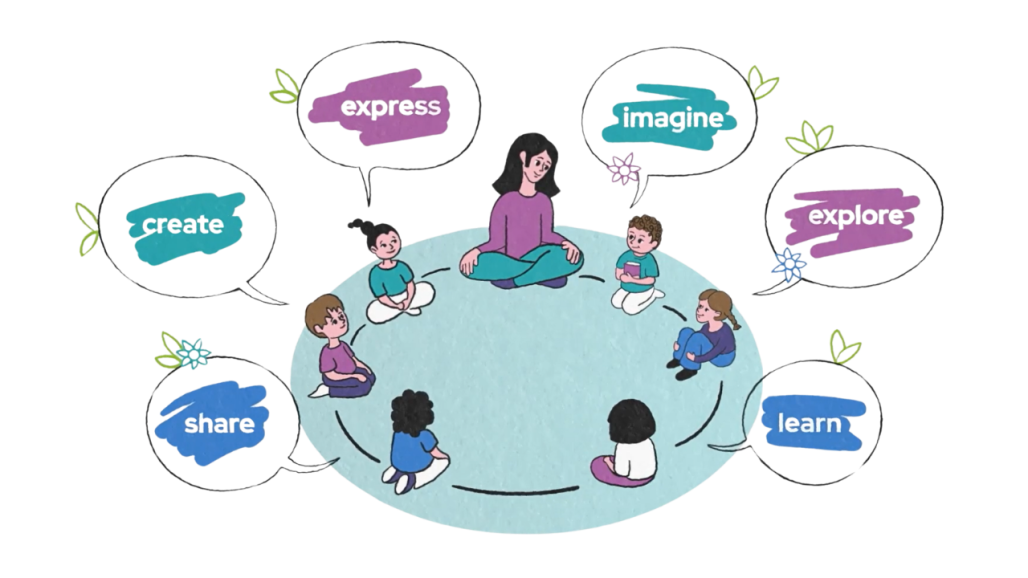

Oral language is more than just words; it shapes learning experiences. Talking and listening are crucial to learning and connecting. Conversations, storytelling, and playful back-and-forth exchanges help kids build vocabulary, understand what they hear, and develop critical thinking skills.

Research shows that early language difficulties are strongly linked to later struggles in literacy, numeracy, and social development (Hulme et al., 2024). Identifying these challenges early is crucial in preventing long-term academic and behavioral issues. Children with undiagnosed language challenges may experience significant disadvantages in academic achievement and social well-being without intervention.

Scarborough’s Reading Rope reveals that reading mastery combines two essential strands: word recognition (phonics and decoding) and language comprehension (vocabulary, background knowledge, and syntax). To foster full literacy development, students need to be exposed to rich language experiences that build comprehension, ensuring they don’t just read words but truly understand and engage with them.

As an educator, you play a vital role in bridging the gap between spoken and written language, and you’re likely already incorporating many of these strategies in your classroom. This guide offers practical, research-backed techniques to help you refine and enhance oral language instruction, ensuring that every student—regardless of background or skill level—has the tools needed for academic success.

As a district leader, you can shape a system-wide approach that prioritizes oral language instruction and provides educators with the training, tools, and resources needed to implement it effectively. This guide outlines evidence-based strategies for integrating oral language development into district literacy policies, teacher training, and assessment practices, ensuring that all students, especially those struggling with language acquisition, receive the support they need to become strong, confident readers.
Oral language development plays a critical role in literacy acquisition. Research underscores that strong oral language skills contribute significantly to reading comprehension, vocabulary expansion, and overall academic success. By prioritizing oral language instruction, educators can foster improved reading outcomes and deeper student engagement with complex texts.

Oral language skills are the foundation for academic success. Children who develop strong speaking and listening abilities in early childhood often excel in middle and high school. Meanwhile, weak language skills can lead to difficulty in comprehension, writing, and subject mastery. Here are seven ways that strong oral language skills help students as they progress through school.