
Know sooner. Act sooner. Change the outcome.
Find what's holding each older reader back. Teach exactly that.
Every struggling reader has a different reason for getting stuck. RGR Nova™, the Literacy Outcomes System (LitOS™), identifies the precise skills holding students back, groups them by need, and equips educators with targeted, age-respectful lessons—so every intervention minute can move learning forward.
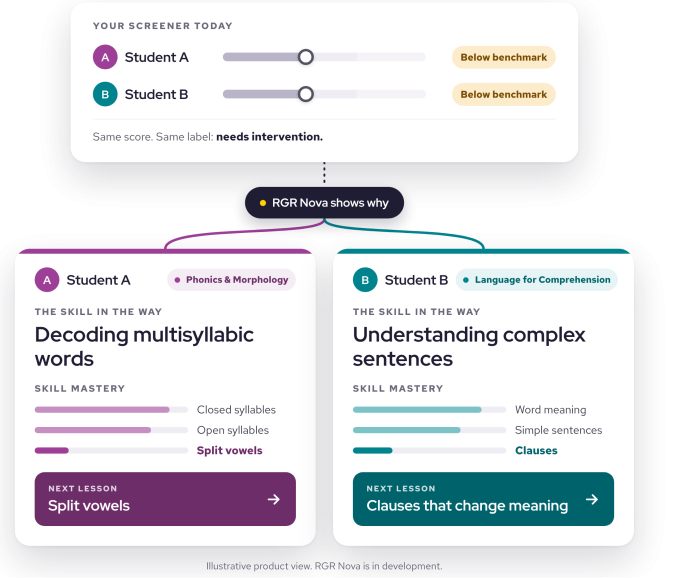
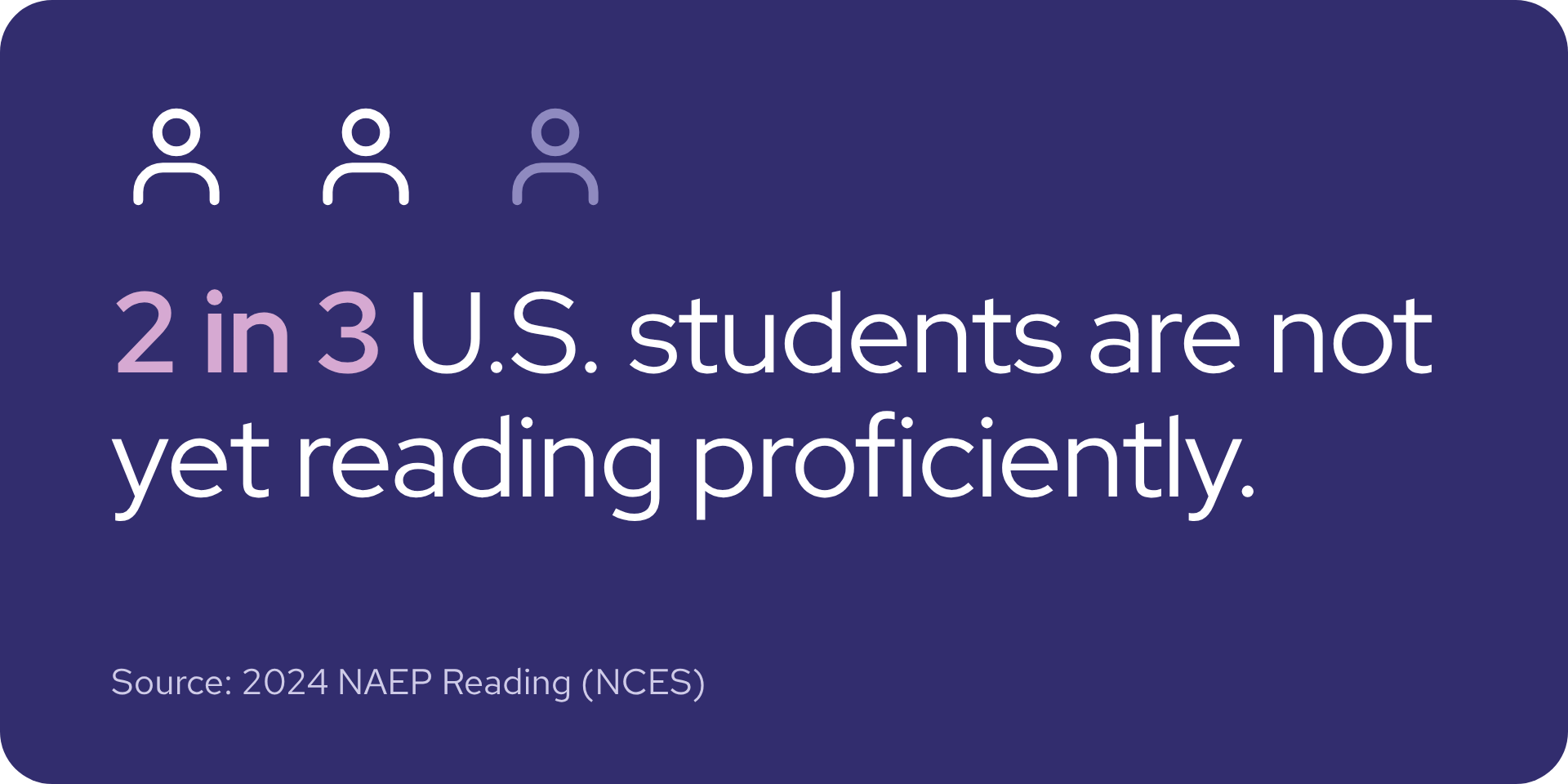
69% of fourth graders and 70% of eighth graders scored below Proficient on the 2024 NAEP Reading assessment. Most districts already know who these students are. The harder question is why they’re struggling, and what to teach next.
By upper elementary and middle school, reading gaps become increasingly complex. Most get stuck in one of three places, and each needs its own kind of instruction. RGR Nova reaches all three, so teachers can combine strands for each student without switching programs.
“This is so stupid.” Often a cover for word reading that hasn’t clicked. Students skip word endings, guess from context, and avoid reading aloud.
Phonics & Morphology: syllable types and word parts, so students can read and spell the longer words in every class.
“I read it, but I just don’t get it.” Students read the words but lose the meaning in academic vocabulary and long, layered sentences.
Language for Comprehension: vocabulary, syntax, and a routine for unpacking complex sentences.
“I don’t know what to write.” Students understand the text but struggle to organize their ideas into clear sentences and paragraphs.
Written Expression: from sentence expansion to paragraph outlines, with explicit steps at each stage.
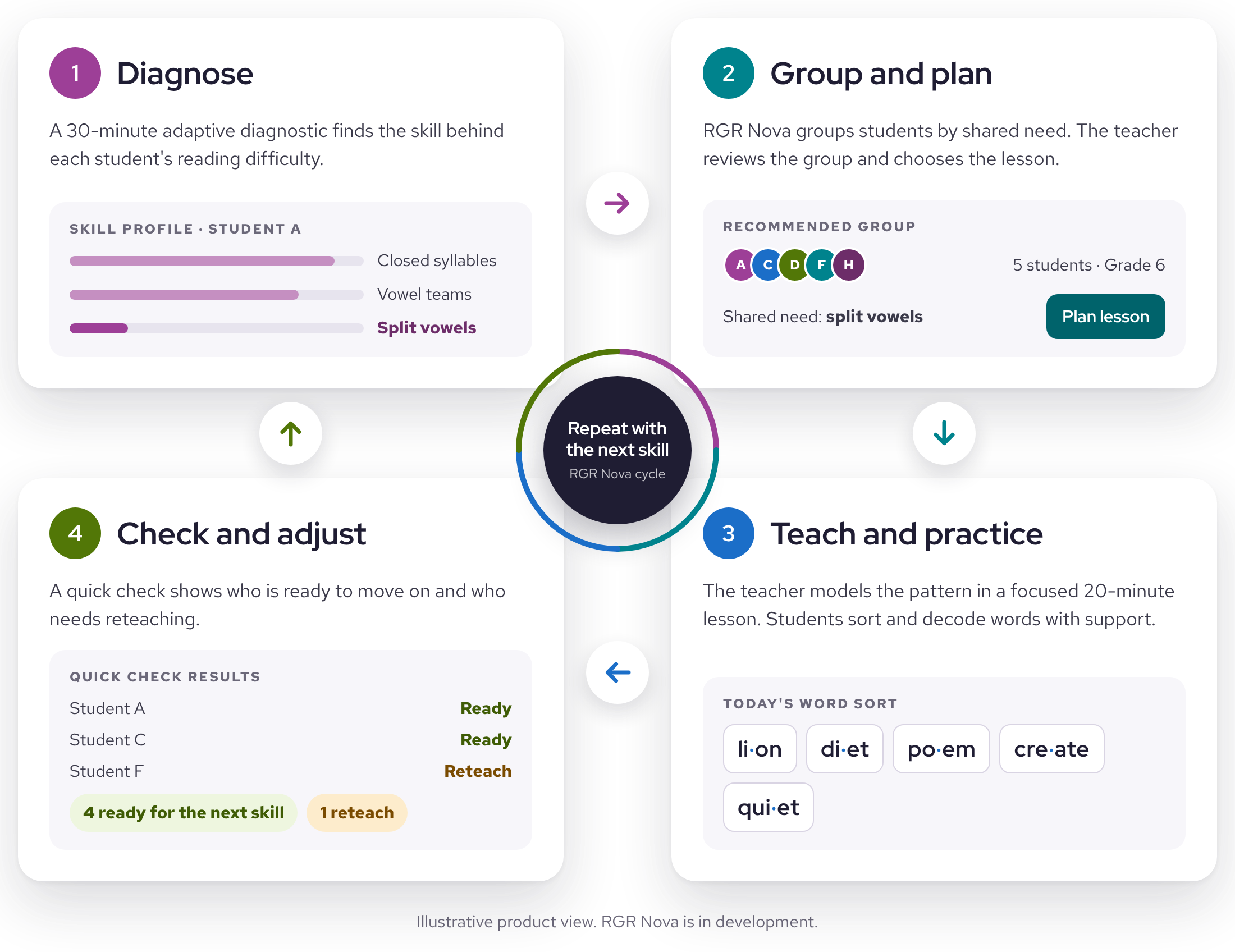
RGR Nova finds the skill in the way, groups students who share it, and gives teachers the lesson that teaches it. Quick checks show who’s ready to move on, and the cycle repeats with the next skill, in focused 20-minute lessons.
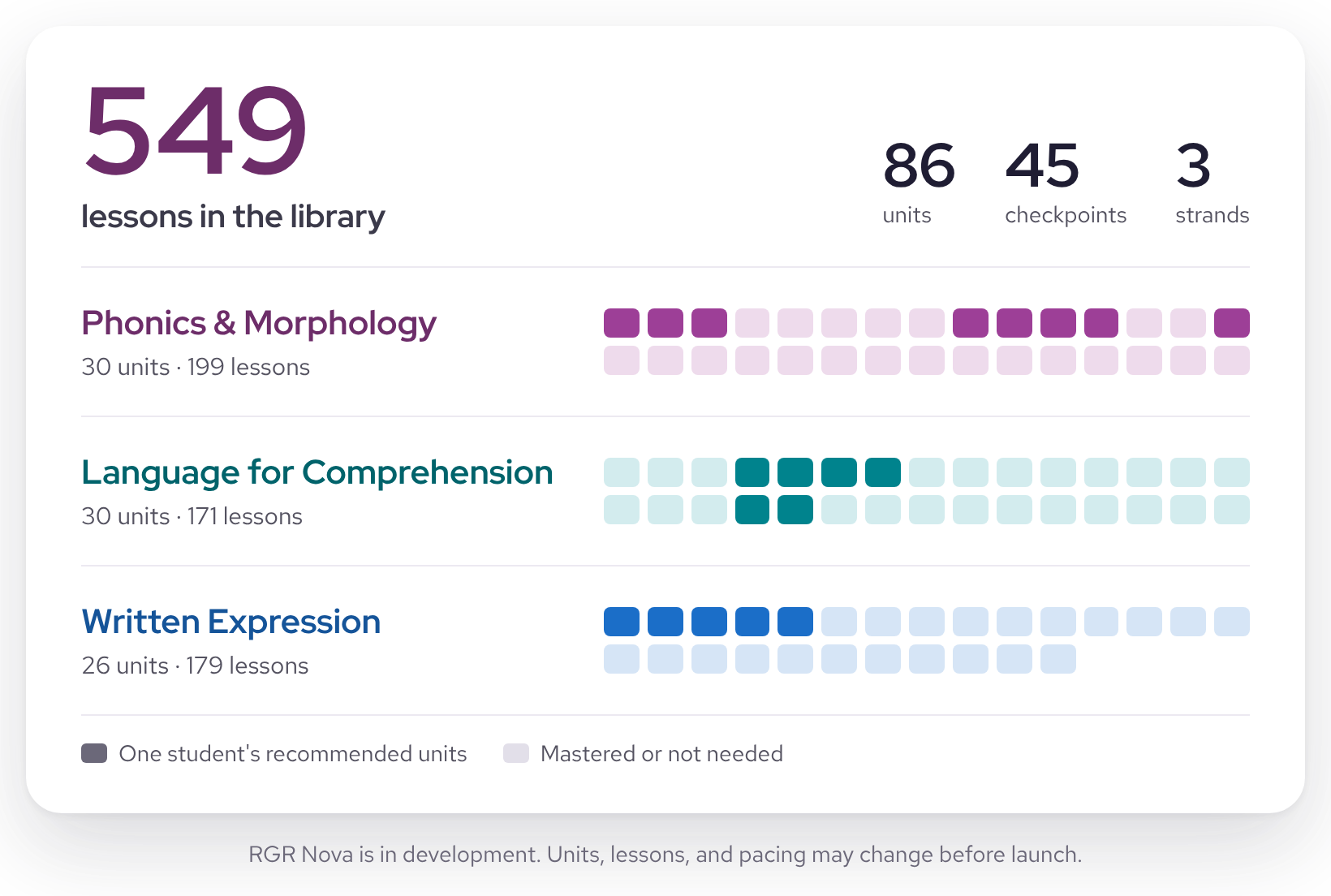
Built-in checkpoints show which skills each student is missing, so students skip what they’ve already mastered. See every unit across Phonics & Morphology, Language for Comprehension, and Written Expression.
Older readers know when material was written for younger kids. RGR Nova lessons use age-respectful texts connected to grade-level content, so students build foundational skills without feeling singled out.
Middle school intervention rarely gets a full hour. Each lesson runs 20 minutes, and lessons combine to fit your block:
• 20 minutes: one focused lesson
• 40 minutes: two lessons, across one strand or two
• 60 minutes: up to three lessons for those who need more
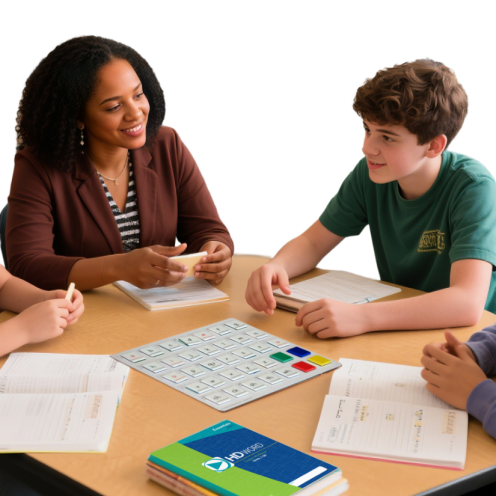
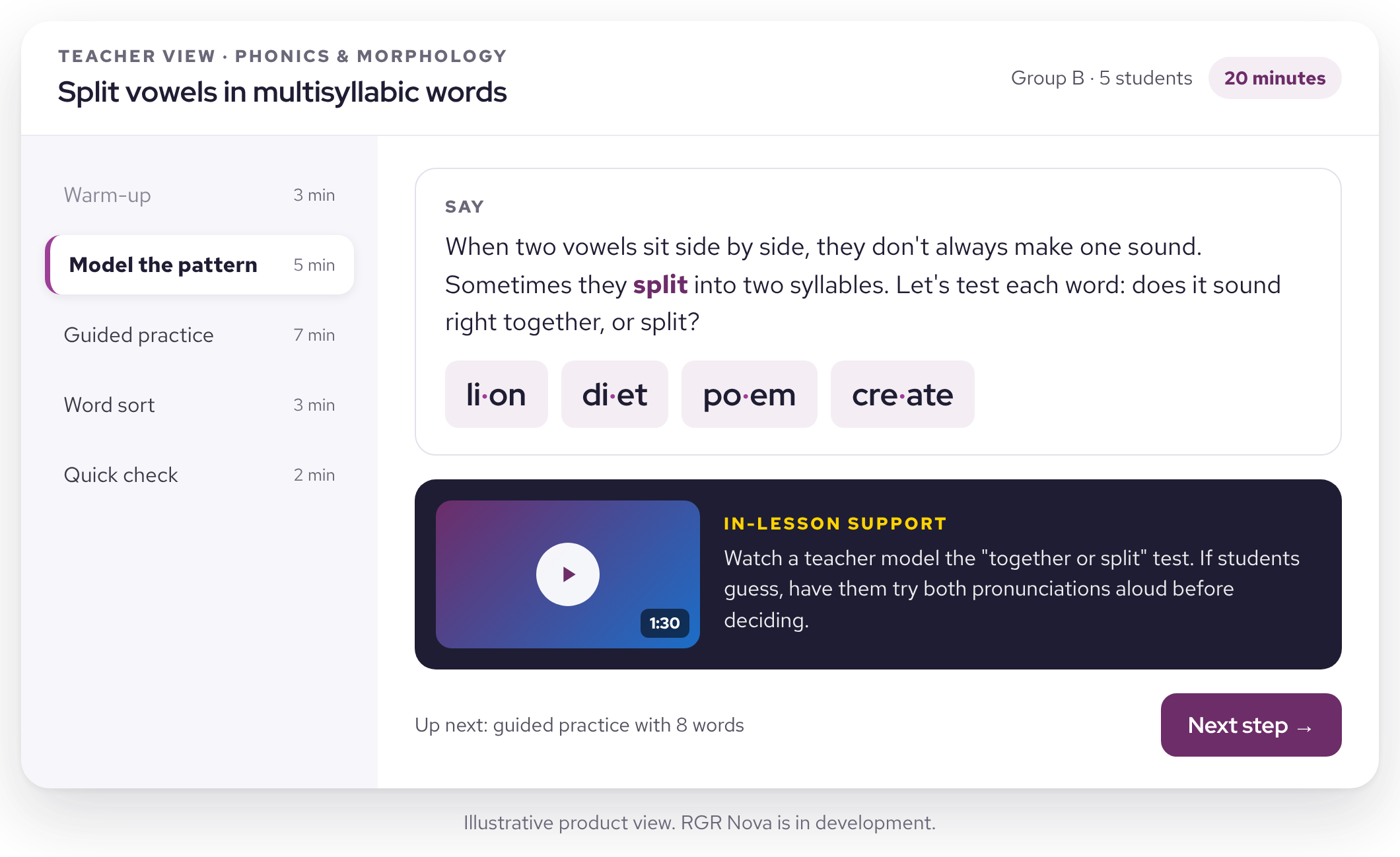
Intervention might be led by a reading specialist, a history teacher, or a paraprofessional. With professional learning built into every lesson, each educator grows their expertise while they teach, and that expertise stays in your district as your team grows and changes.
- In every lesson: prompts and short videos that build skill while educators teach.
- On demand: PD Library modules and courses for new staff and refreshers.
- Live and collaborative: virtual or in-person sessions and workshops that build shared practice across schools.
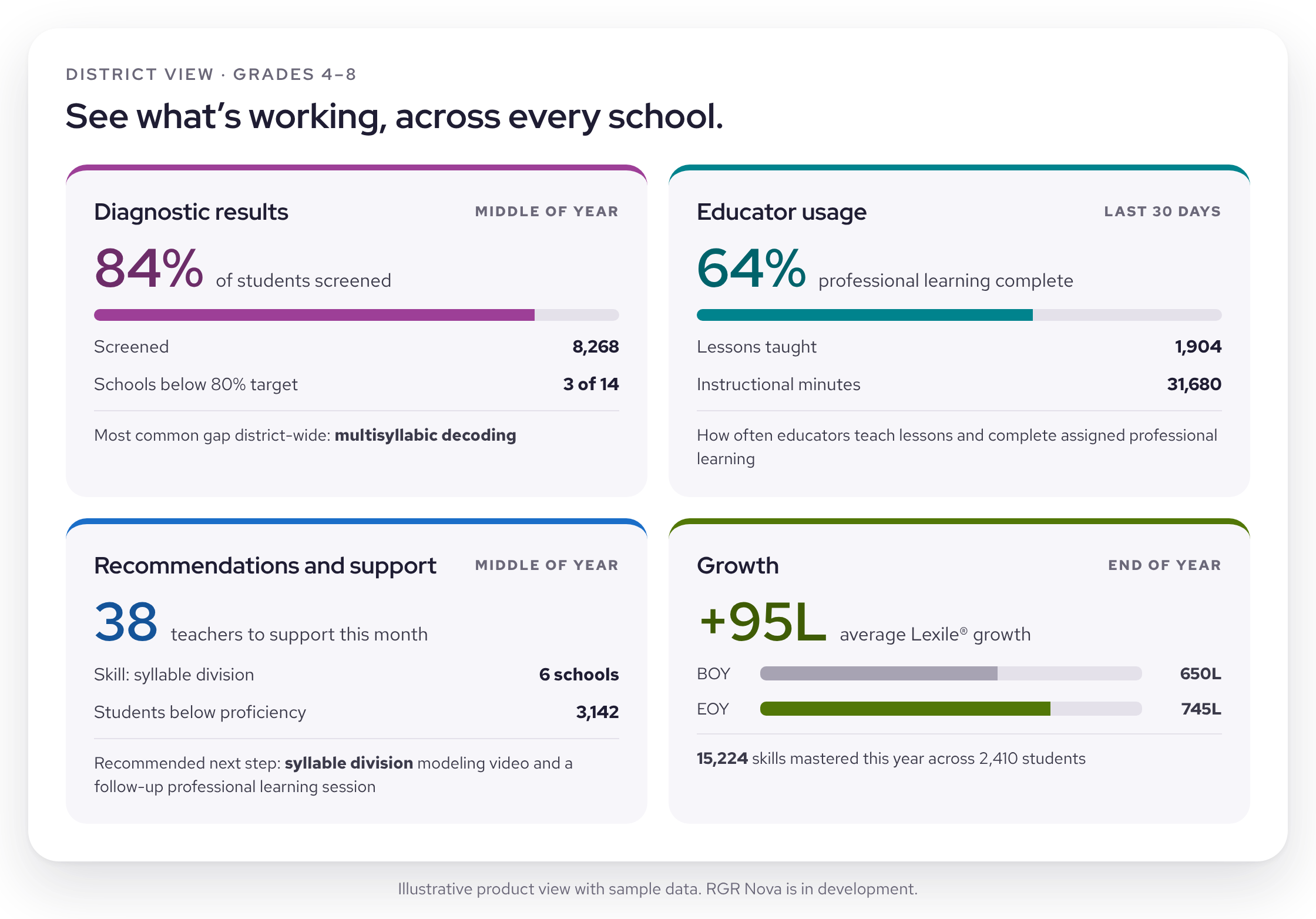
Reading progress leaders can act on during the year, not just at benchmark season.
- Focus: the skills most often missing, by school.
- Support: where teachers need help, and what comes next.
- Act early: which schools and groups are falling behind.
- Show growth: skills mastered and reading growth, fall to spring.
Where districts qualify, an outcomes based contract can tie part of our fees to agreed upon outcomes.
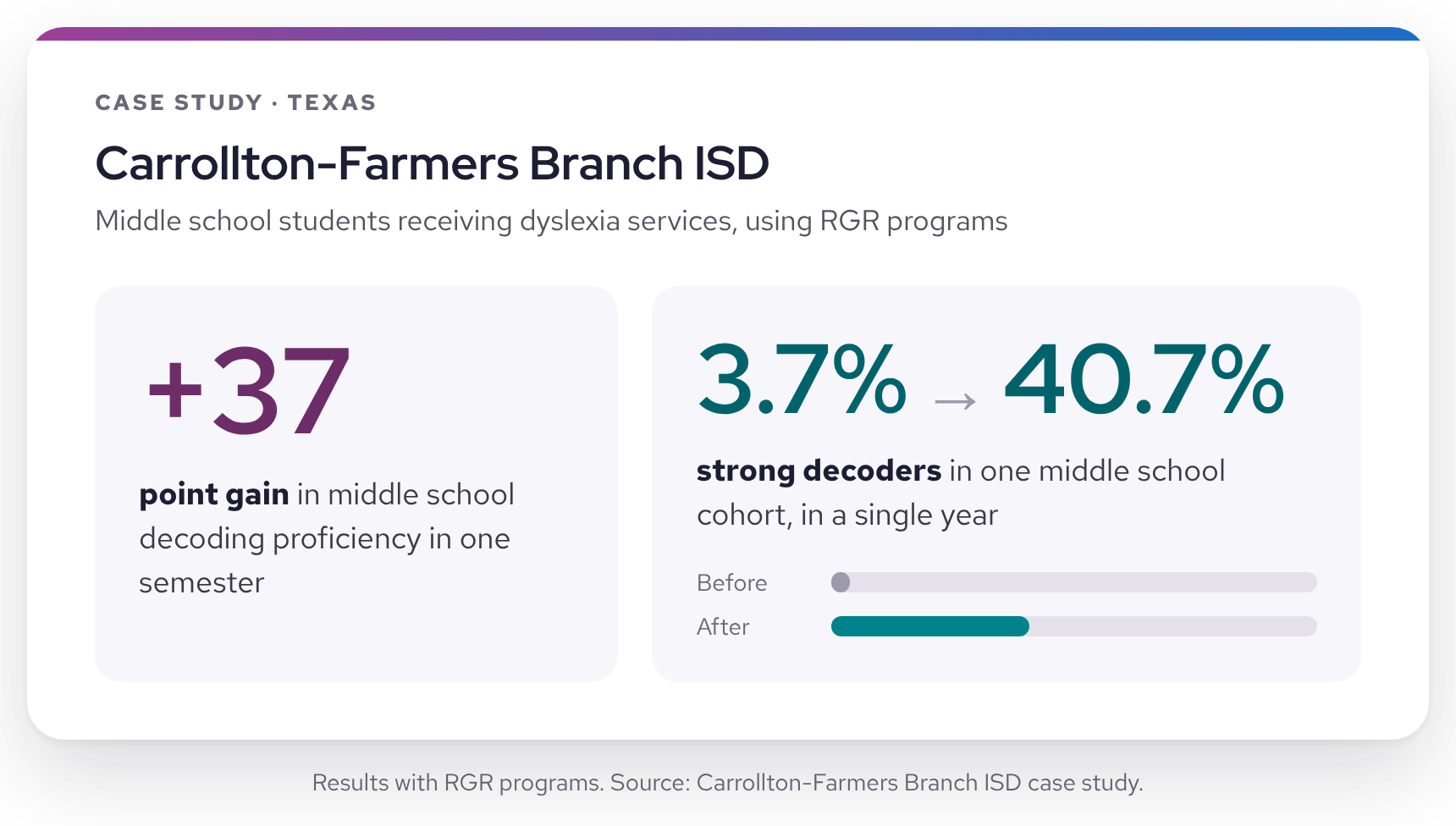
Carrollton-Farmers Branch ISD used RGR programs to standardize placement, group students by skill need, protect intervention time, and monitor progress for middle school students receiving dyslexia services. In one middle school cohort, the share of strong decoders grew from 3.7% to 40.7% in a single semester.
RGR Nova builds on RGR programs used in more than 2,000 districts, where students have mastered 19.9 million foundational reading skills since 2024. Independent reviews of those programs found:
- Vocabulary acquisition: In a peer-reviewed 2022 study of 5th-grade students, learners using the semantic reasoning approach used in RGR products acquired academic vocabulary three to four times faster than students in direct-instruction comparison groups. Kennedy et al., Journal of Special Education Technology.
- EdReports awarded RGR all green, near-perfect scores for alignment, usability, and instructional quality
- ESSA Tier II studies show RGR programs accelerate student progress across classrooms
- The Reading League's review found no “red flags” across the skills RGR's programs target
- Rivet Education certifies RGR in the Professional Learning Partner Guide for high-quality educator PD
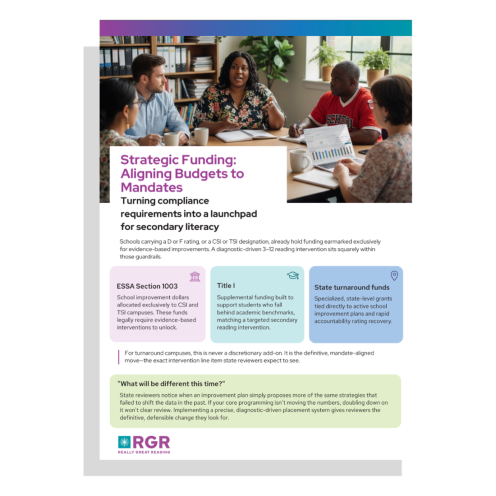
Screening flags the gap. This guide helps you fund the solution. The Intervention Funding Guide gives K–12 leaders an evidence-aligned framework for funding literacy intervention, built to hold up when you present your budget to your school board.
Tell us where students are getting stuck. We’ll walk you through RGR Nova from the perspective that matters most to you: student, educator, or administrator.

What grades does RGR Nova for Intervention serve?
RGR Nova for Intervention is built for grades 4–8 at launch for the 2027–28 school year. The content is age-respectful and designed to adapt up to grade 12, and we’ll share our high school timeline as it develops. In the meantime, high schools are already using Really Great Reading programs with older students who need foundational support. Learn about the growth seen at Carrollton-Farmers Branch ISD and Sunburst Youth Academy.
When is RGR Nova available?
RGR Nova is coming for the 2027–28 school year, so now is the right time to build it into your planning for next year. Our current grades 3–8 programs are available this school year.
How does RGR Nova identify what each student needs?
A 30-minute adaptive diagnostic identifies the specific skills getting in each student's way. RGR Nova groups students automatically and recommends the next lesson for each group. Built-in checkpoints show when students are ready to move on, so they skip what they have already mastered.
What skills does RGR Nova for Intervention cover?
Lessons span three strands: phonics and morphology, language for comprehension, and written expression. Students work on the strand and skill where they need support.
How many lessons are there?
The library includes 549 lessons across three strands. Each student is recommended only the lessons that build the skills they're missing. RGR Nova is still in development, so units, lessons, and pacing may change before launch.
How long are lessons?
Teachers lead focused 20-minute lessons, with quick checks to show who's ready to move on.
How are lessons designed for older readers?
Lessons use age-respectful texts connected to grade-level content, so students build skills without materials written for younger children.
How much screen time do students have?
Teachers lead the instruction. Independent practice reinforces each lesson while keeping screen time limited for students.
Do teachers need to be reading specialists?
Teachers and leaders see which skills students are mastering and where they need more support during the school year, not only at benchmark windows.
How will leaders know whether it's working?
Teachers and leaders see which skills students are mastering and where they need more support during the school year, not only at benchmark windows.
What can we use this school year?
Our current grades 3–8 intervention programs are available now, with free two-week trials of HD Word Plus and HD Word Online. Talk to a literacy specialist about the right fit for your students.