
Put Michigan’s Funding to Work for 2026–27
State-approved materials, independent evidence, and proven implementation support for better literacy outcomes.


Wayne-Westland Community Schools aligned literacy instruction, professional learning, and implementation support across PreK–5.
The challenge: More than 100 literacy tools were creating inconsistent instruction across the district.
The approach: Wayne-Westland aligned instruction around shared structured literacy routines, Tier 1 support, and ongoing coaching.
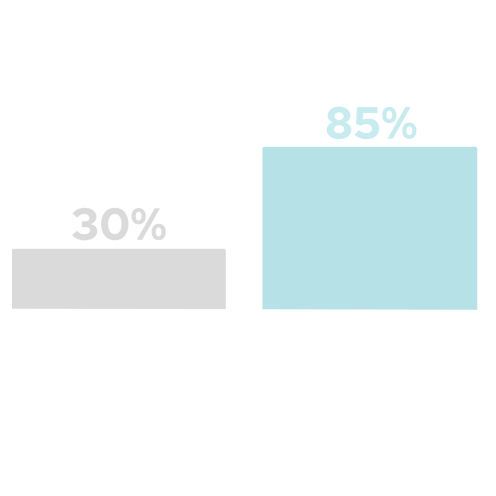
The result: Grade 5 decoding proficiency increased from 30% to 85% in one school year, while 97% of teachers reported literacy gains within two months.
Really Great Reading partners with Michigan districts to strengthen literacy instruction, support educators, and help more students become successful readers.



Michigan’s FY26 Section 35M funding gives districts more than one path forward. Even if you’ve already made a selection, you may still have options to pilot, refine your plan, or add another approved resource to address additional needs.
Use 2026–27 to pilot approved materials and inform the decisions that boost your district's literacy journey.
Eligible districts can amend their final selection through July 20, 2027, within their selected funding category.
In certain circumstances, districts can add another approved resource from the same rankings list, including different resources across grade levels.
Michigan’s new literacy requirements will expand district responsibilities across K–12. Use 2026–27 to make sure your literacy systems, educators, and interventions are ready.
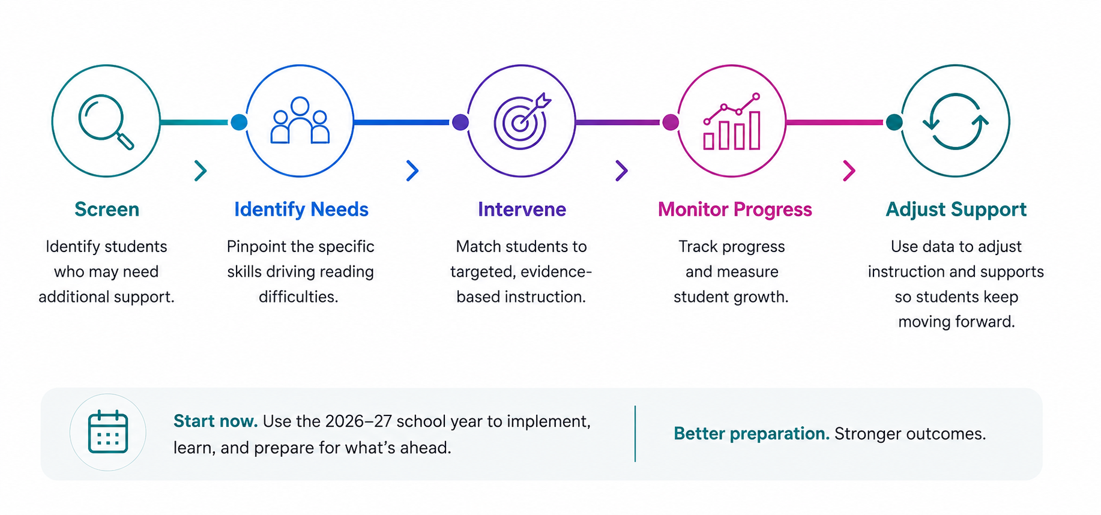
Really Great Reading helps districts connect assessment, evidence-based instruction and intervention, professional learning, and implementation support to build a more responsive literacy system. For districts with FY26 Section 35M funding, 2026–27 also provides an opportunity to pilot approved materials and refine your final selection through July 20, 2027, within your selected funding category.
With new statewide literacy requirements taking effect in 2027–28, the coming school year is an opportunity to strengthen what’s already working, address remaining needs, and prepare educators for what comes next.
PA 146 expands expectations for screening, intervention, progress monitoring, and educator preparation. Use our Michigan Readiness Checklist to assess whether your district has the systems in place to identify student needs, respond with targeted instruction, and support educators before the new requirements take effect.
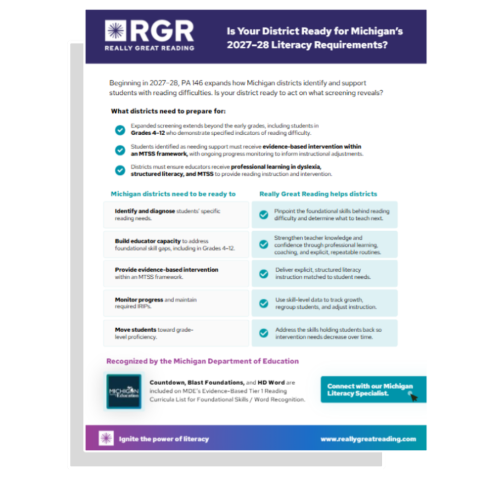
Not ready for a full commitment? Eligible districts can pilot approved materials during 2026–27 and refine their final selection through July 20, 2027, within their selected funding category.
From stronger foundational skills to targeted support for older readers, RGR helps districts extend their literacy strategy with explicit, teacher-led instruction and sustained educator support.
Add explicit, systematic foundational skills instruction to help more students build the skills they need for proficient reading.
Give older students targeted, teacher-led instruction in the foundational and language skills they still need to access increasingly complex text.
Turn evidence-based literacy practices into consistent classroom instruction through explicit routines, ongoing professional learning, coaching, and implementation support.
Whether you’re evaluating foundational skills materials, addressing persistent reading gaps, or planning for the year ahead, RGR can help you identify where additional support can make the greatest difference.
Find out how RGR can fit your district’s literacy priorities and instructional needs.
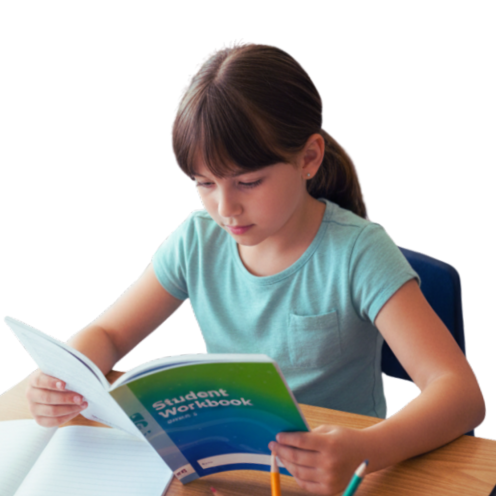
When students reach Grades 3–8 with unresolved reading gaps, increasingly complex text only raises the stakes. RGR helps educators target the foundational and language skills older readers still need to become stronger, more capable readers.
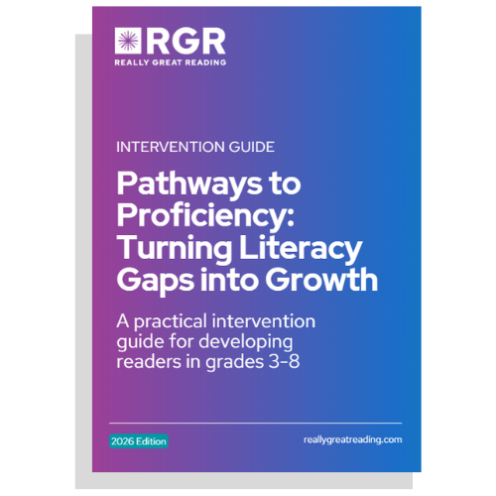
FREE GRADES 3–8 INTERVENTION GUIDE
Pathways to Proficiency gives elementary and middle school leaders a practical framework for identifying student needs, matching intervention to the skill gap, and building responsive intervention groups.
Inside the guide:
- Four developing-reader profiles
- What universal screeners may miss
- A practical placement pathway
- Guidance for Grades 3–5 and 6–8
- A responsive monitoring and regrouping model

Strong implementation takes more than a kickoff. RGR gives educators practical support they can use as they teach, with clear instructional routines, ongoing professional learning, coaching, and resources that reinforce strong practice over time.
As needs evolve, the support evolves too.
Teachers get help putting evidence-based practices into action, while coaches and leaders build the knowledge and consistency to strengthen implementation across classrooms and schools.

Your Michigan literacy partner can help you strengthen what’s already in place and determine the right next step for your district. Whether you’re strengthening foundational skills, addressing persistent gaps among older readers, exploring Section 35m opportunities, or building educator capacity, we’ll help you identify a practical path forward.
Beginning October 1, Michigan is moving English Learner funding into regular state aid through weighted per-pupil payments. Districts will no longer need to apply separately for FY27 EL funding.
For districts serving English Learners, this creates another opportunity to plan for evidence-based literacy instruction and intervention as part of your broader 2026–27 strategy.
Is Really Great Reading approved in Michigan?
Yes. Really Great Reading’s foundational skills programs are top-rated by the Michigan Department of Education and eligible for Section 35m funding. RGR supports evidence-based, structured literacy instruction aligned with Michigan’s PA 146/147 requirements.
Can Section 35m funding be used for Really Great Reading?
Section 35m provides funding for eligible materials, interventions, professional development, tools, and services included on applicable MDE rankings lists. Eligibility depends on the specific solution, funding category, and district application.
Can we start small before making a broader commitment?
For districts that applied for FY26 Section 35m funding, MDE permits materials to be piloted during the 2026–27 school year. Eligible districts may amend their final selection through July 20, 2027, provided the change remains within the category selected in the original application.
Outside of Section 35m, RGR can also work with districts to identify an implementation approach that fits their current priorities.
We already invested in a core curriculum. Where does RGR fit?
RGR can complement an existing core by strengthening explicit foundational skills instruction and providing targeted support for students who need more. The goal is to strengthen your literacy system, not require you to start over.
How does RGR support older struggling readers?
RGR provides explicit, teacher-led literacy intervention for older students with persistent gaps in areas such as decoding, multisyllabic word reading, fluency, vocabulary, and language.
What implementation support does RGR provide?
RGR supports educators through professional learning, coaching, explicit instructional routines, implementation resources, and ongoing learning designed to build educator expertise and consistency over time.
What changes for Michigan districts in 2027–28?
Beginning with the 2027–28 school year, Michigan districts, ISDs, and public school academies must ensure reading instruction and curriculum materials are evidence-based and focused on foundational and other reading skills. The law also establishes requirements related to screening, intervention, MTSS, and professional learning.