
Prioritizing Student Outcomes in Practice
The Education Outcomes Movement helps district and state leaders connect evidence, implementation, and investment to measurable student outcomes. By focusing on student outcomes, leaders can see what is working, where progress is happening, and what to do next.
The Education Outcomes Movement makes measurable student outcomes the starting point for education decisions. Leaders define the result they want to achieve before selecting an approach, then measure whether students reach that outcome.
Outcomes based contracting (OBC) ties a portion of provider payment to agreed-upon student outcomes. Districts, states, and providers agree on the outcomes, how they will be measured, and their responsibilities before the contract begins.
Student outcomes are measurable changes in what students know or can do, such as academic growth, achievement, or proficiency. Progress monitoring helps leaders track whether students are moving toward the intended outcome, identify challenges early, and adjust support while there is still time to improve results.
OBC creates shared accountability for results. Leaders and providers define what success looks like, how they will measure progress, and what happens when the evidence calls for a change. The Education Outcomes Movement applies this focus on measurable student outcomes beyond contracts, guiding decisions about procurement, funding, implementation, program evaluation, and instruction.
Leaders measure student outcomes by tracking changes in what students know or can do and comparing those results with the intended outcome. Tracking what gets purchased, delivered, adopted, and used tells leaders what happened. Student outcomes show whether those efforts produced the intended result.
An outcomes-focused approach asks:
- Did student learning improve?
- Which students benefited?
- By how much?
- What contributed to the result?
- What should we do next?
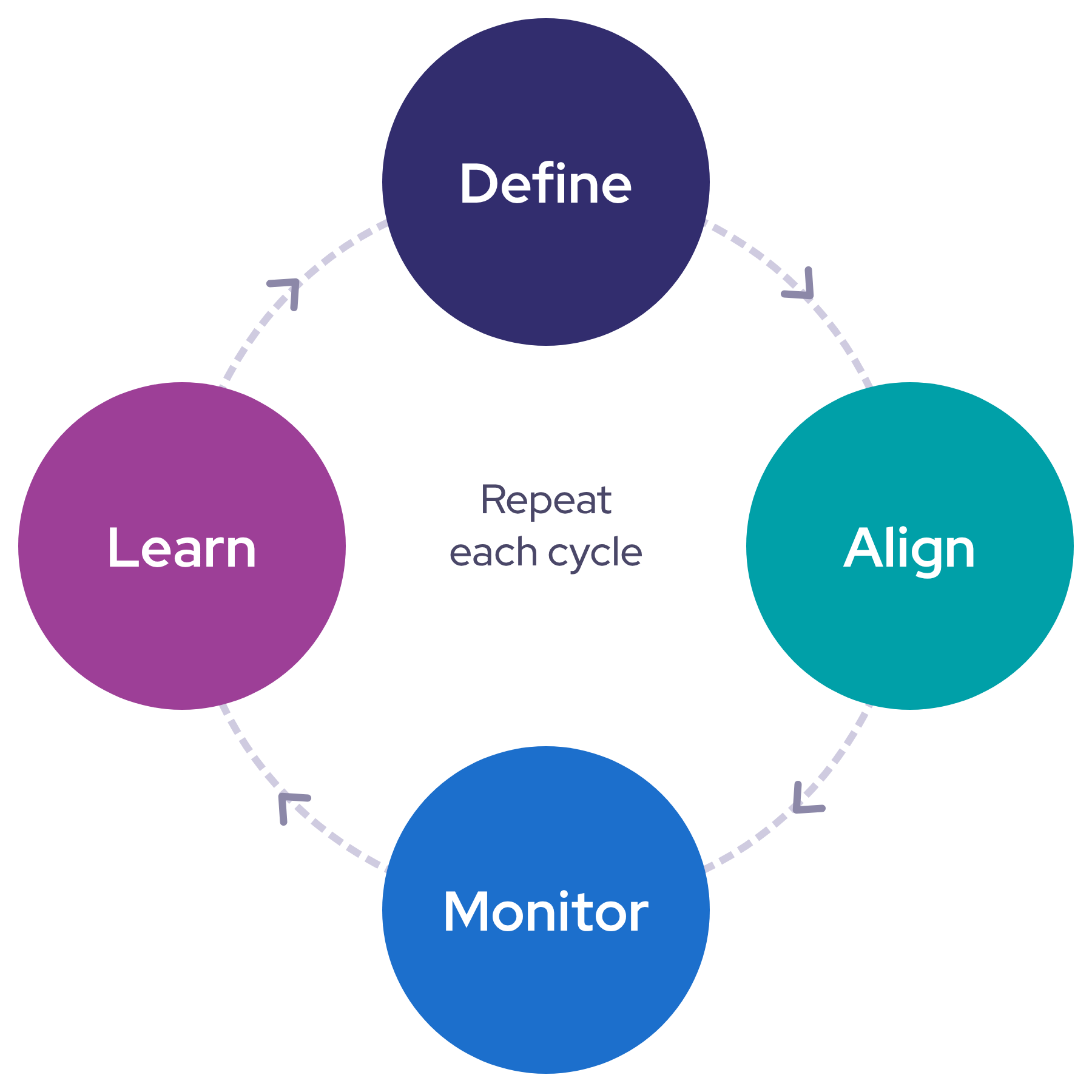
District and state leaders can use this framework to define outcomes, align work, monitor progress, and use evidence to improve results.
1. Define the Goal
Choose a specific student outcome, population, and timeframe. Strong outcomes are:
- Meaningful: addresses a clearly defined student need
- Malleable: can be influenced by the approach
- Measurable: can be tracked accurately over time
2. Align the Work
Align people, funding, instruction, implementation, data, and partners around the outcome.
3. Monitor Early
Track implementation and student progress early enough to identify challenges and adjust.
4. Learn & Improve
Use the evidence to strengthen, scale, or change the approach.
“When outcomes become the starting point, priorities become clearer.”
A 2026 WestEd evaluation of eight early-adopter districts found that outcomes based contracting strengthened communication between districts and providers and increased data use. The evaluation also identified implementation barriers, including district capacity and school buy-in.
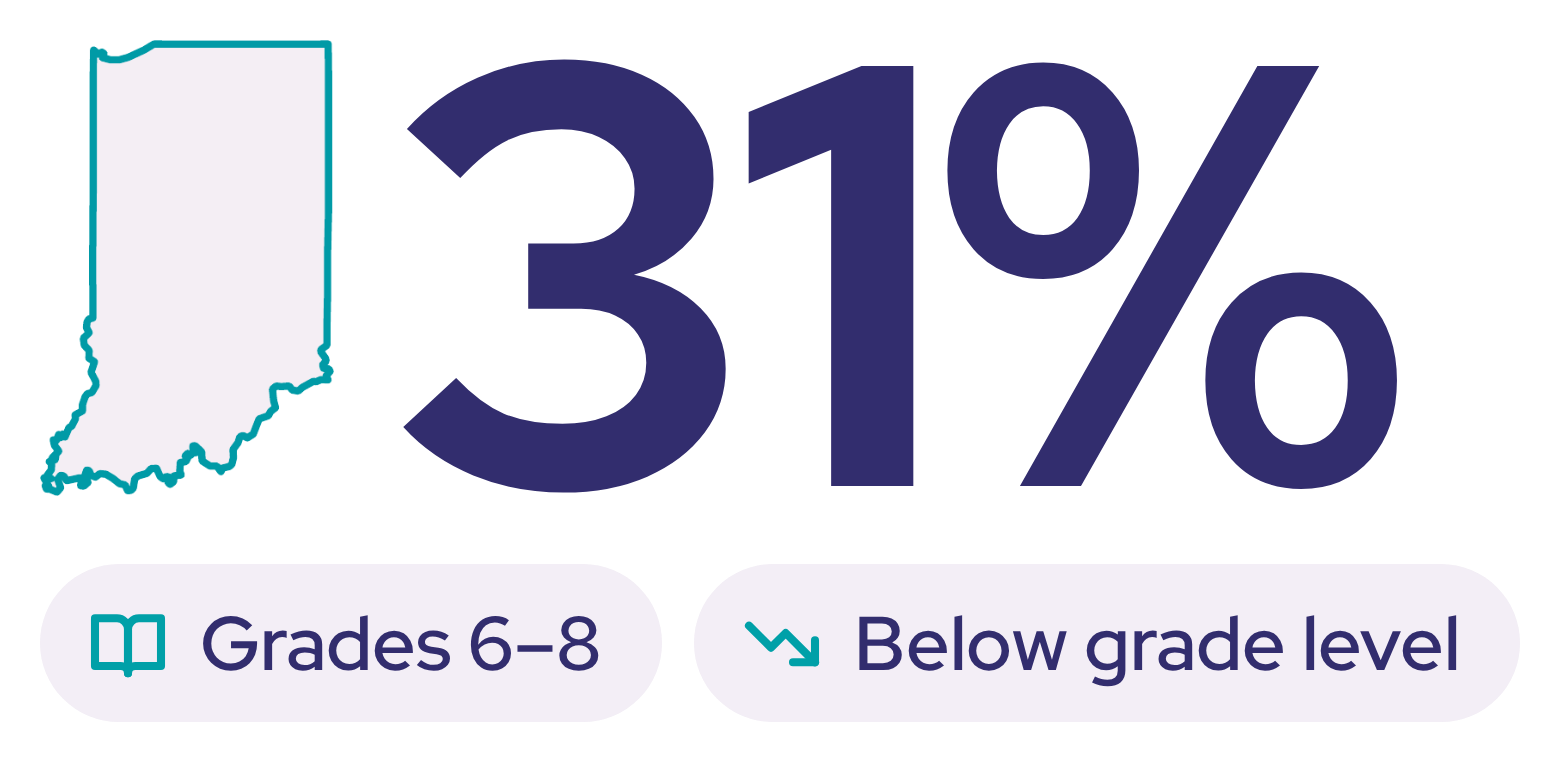
Indiana is using outcomes-based contracting to address adolescent literacy, with a focus on students in grades 6–8. In 2025, state data showed that 31% of students in grades 6–8 were not reading at grade level. Indiana then launched a pilot opportunity to connect evidence-based literacy interventions with measurable student growth.
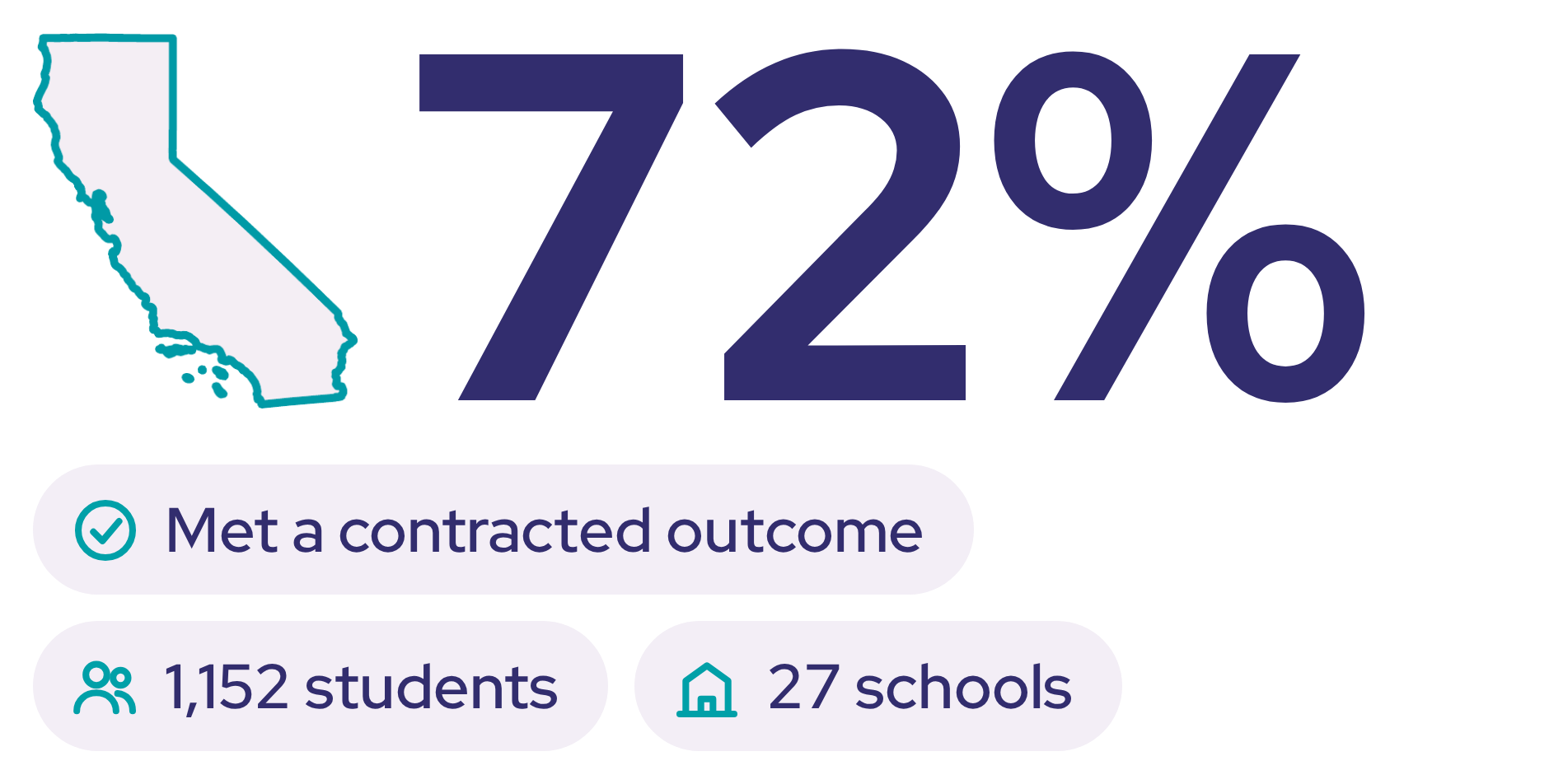
Santa Ana USD began with a 42-student pilot and expanded to 1,152 students across 27 schools. Among participating students, 72% met at least one contracted outcome.
Start with one student priority where the need is clear, the outcome is measurable, and leaders can influence the result. You do not have to redesign an entire system at once.
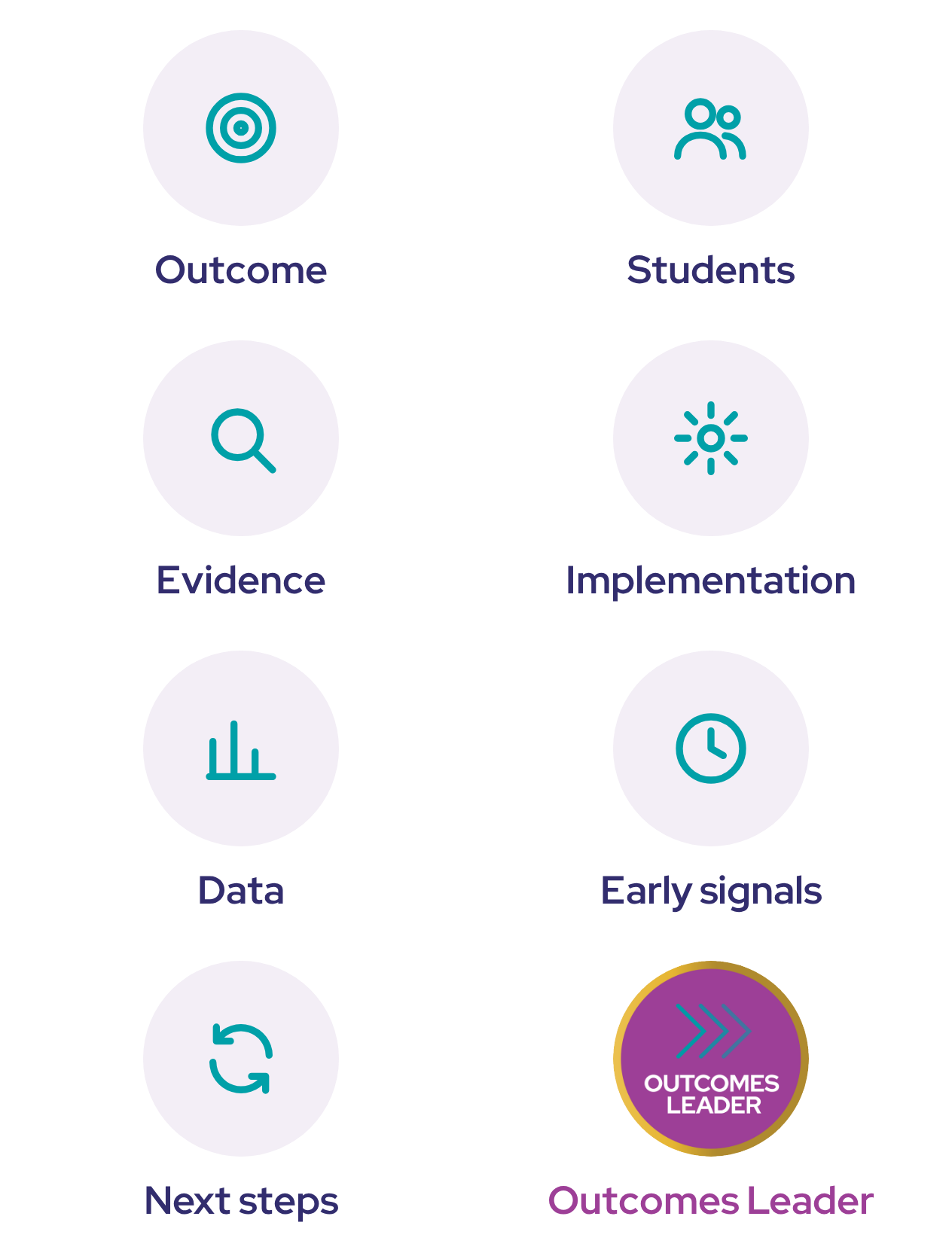
These questions reflect core principles of outcomes based contracting: clear outcomes, evidence-based implementation, progress monitoring, and continuous improvement.
- What student outcome do we want to improve?
- Which students are we trying to reach, and what outcome do we expect?
- What evidence supports this approach?
- What does strong implementation require?
- Do we have the data and capacity to track progress and respond?
- How will we know early if we are on track?
- How will we use the results to decide what comes next?
Ready to Put Student Outcomes First?
Outcomes Drive Everything. Partnership makes them possible.
What is the Education Outcomes Movement?
The Education Outcomes Movement describes a shift toward starting education decisions with the student results leaders want to achieve, then aligning evidence, investment, implementation, measurement, and accountability around those outcomes. The focus moves beyond what was purchased or delivered to what changed for students as a result.
What are student outcomes in education?
Student outcomes are measurable indicators of student learning or academic progress, such as growth, gains, achievement, and proficiency. They help leaders understand whether an investment, program, or instructional approach is contributing to meaningful change for students.
What is the difference between inputs and outcomes in education?
Inputs are the resources put into an educational effort, such as funding, programs, staffing, technology, or professional learning. Outcomes describe what changed for students. Implementation and process measures, such as participation, dosage, engagement, and progress, help leaders understand what happened between the investment and the result.
How are student outcomes measured?
Student outcomes are measured by defining the student population, starting point, desired result, timeframe, and the metric used to track progress. Strong measures should be valid, reliable, aligned with the intended outcome, and specific enough to show whether meaningful growth or achievement occurred.
Do student outcomes only mean test scores?
No. Assessments can be an important source of outcome data, but a strong measurement approach can draw from multiple valid and reliable sources to build a more complete picture of student performance. The Center for Outcomes Based Contracting specifically recommends assessment diversity to reduce gaps and bias in measurement.
What makes a strong student outcome?
A strong student outcome is meaningful, malleable, and measurable. It should align with an important priority, be something the intervention or strategy can reasonably influence, and be possible to monitor accurately over time.
How does implementation affect student outcomes?
Evidence-based programs are most likely to produce their intended results when they are implemented in ways that reflect the research behind them. That can include factors such as dosage, frequency, duration, engagement, professional learning, and other conditions needed for successful implementation.
What is outcomes based contracting in education?
Outcomes-based contracting (OBC) is a purchasing model that ties a meaningful portion of provider payment to agreed-upon student outcomes. The Center for OBC’s framework also emphasizes clearly defined populations and metrics, mutual accountability, and continuous improvement throughout implementation.
Is outcomes-based contracting the same as the Education Outcomes Movement?
No. Outcomes based contracting is one way leaders can put outcomes-focused thinking into practice. The broader Education Outcomes Movement can also shape procurement, implementation, program evaluation, funding decisions, instructional decisions, and how leaders use evidence to improve student results.
Who is responsible for student outcomes?
Student outcomes are influenced by multiple people, decisions, and conditions. Outcomes-focused approaches make those responsibilities clearer by defining what each partner contributes toward a shared goal. In outcomes-based contracting, the Center for OBC calls this mutual accountability, with agreed-upon responsibilities for both districts and providers.
How can district and state leaders start focusing more on outcomes?
Start with one student priority that leaders can realistically influence. Define the desired outcome, align the people and conditions needed to achieve it, monitor implementation and progress early, and use the evidence to decide what to sustain, strengthen, scale, or shift. This creates a continuous cycle of learning and improvement rather than waiting until the end to determine whether an approach worked.