
The Screening Results Say They’re Behind. Now What?
Some middle school students read familiar words successfully but still slow down when they encounter longer, unfamiliar words. Others may benefit from additional support applying advanced phonics patterns or developing automatic word recognition.
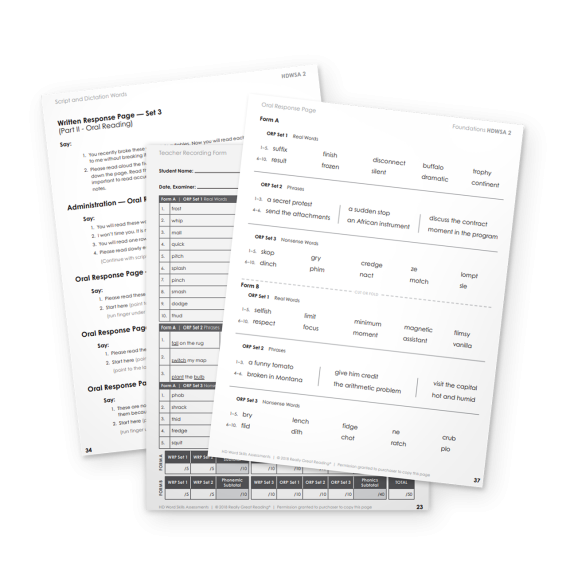
Diagnostic information can help pinpoint those word-reading needs and give teams a more focused starting point for instruction.
Effective decoding intervention for students in grades 6–8 may address advanced phonics patterns found in longer and more complex words, accurate decoding, multisyllabic word reading, and automatic word recognition. Explicit instruction, age-respectful materials, connected-text practice, and ongoing progress monitoring can help students strengthen these skills while building from what they already know.
Middle school students encounter increasingly complex words across every subject. Longer words, specialized academic vocabulary, and more demanding texts all place greater demands on word reading. Stronger decoding skills can help students approach those words with greater accuracy and efficiency.
Depending on the student’s reading profile, instruction may focus on:
- Advanced phonics patterns
- Accurate decoding
- Multisyllabic word reading
- Automatic word recognition
Explicit, systematic instruction gives students clear strategies and structured opportunities to apply them.
Practice can then move from individual words into phrases, sentences, and connected text so students apply developing word-reading skills in authentic reading.
Diagnostic information can help identify which skills students already use successfully and where additional instruction may support continued growth.
Middle school students bring years of knowledge, experiences, interests, and ideas to their reading. Effective intervention can draw on those strengths while providing focused practice with developing word-reading skills.
Age-respectful instruction can include:
- Topics, texts, and examples that reflect adolescent interests and knowledge
- Pacing and practice that build from students’ existing skills
- pportunities to apply word-reading skills in connected text
Age-respectful decodable texts can also provide structured opportunities to apply phonics and word-reading skills in connected text created for adolescent readers.
These experiences give students meaningful practice while supporting engagement and confidence.
Our Grades 3–8 Intervention Guide helps teams identify specific reading needs and connect students with targeted support in word reading, fluency, and language comprehension.
Effective middle school decoding intervention combines precise diagnostic information, explicit and systematic instruction, practice with complex words, age-respectful materials, and progress monitoring.
Diagnostic information that guides instruction
- Useful diagnostic information can clarify which word-reading skills are secure and which skills may benefit from additional instruction.
- That level of detail can help teachers determine an instructional starting point and organize targeted practice.
Explicit, systematic decoding instruction
- Clear, sequenced instruction supports students as they learn how written patterns work and apply that knowledge to unfamiliar words.
- For older students, instruction may include advanced phonics patterns and strategies for reading increasingly complex multisyllabic words.
Practice with complex and multisyllabic words
- Middle school students encounter academically demanding words across the curriculum.
- Decoding instruction can give students structured opportunities to apply word-reading knowledge to the types of words and texts they encounter throughout the school day.
Materials designed with older students in mind
- Age-respectful materials give students opportunities to practice developing skills through content that reflects their maturity, knowledge, and interests.
Progress information that supports instructional decisions
- Progress monitoring can show how students respond to instruction over time.
- Teams can use that information to continue a current focus, introduce new skills, regroup students, or adjust the intensity of support.
Middle school intervention operates within existing schedules, staffing structures, intervention periods, and MTSS frameworks.
A decoding intervention also has to fit the time schools have available, whether support happens during a dedicated intervention block, another instructional period, or within a broader MTSS schedule.
Shared approaches to assessment, instruction, and progress monitoring can create greater consistency across classrooms and schools. They can also give district and school leaders clearer information about student progress and implementation.
Within those shared structures, teachers and interventionists can respond to the specific strengths and needs of the students they serve.
For some students, decoding represents the primary area for additional instruction. Other students benefit from support across several areas of reading.
A student may work on decoding and fluency at the same time. Another may strengthen word reading while also building vocabulary or language comprehension. Reading profiles may also change as students develop new skills.
Students can strengthen decoding while continuing to build fluency, language comprehension, and access to challenging text.
Diagnostic information and progress monitoring can help make those changes visible and support responsive instructional decisions over time.
Decoding intervention can target advanced phonics, multisyllabic words, and automatic word recognition.
Diagnostic information helps pinpoint specific word-reading strengths and developing skills.
Explicit, systematic instruction gives older students focused practice with complex words.
Age-respectful materials help students apply decoding skills in meaningful reading
Progress monitoring helps teams adjust support as students’ reading needs change.