
Virginia Literacy Solutions for School Division Leaders
Every VALLSS screening window identifies students who can't afford to wait. Really Great Reading helps Virginia divisions turn screening data into targeted instruction through VDOE-approved programs and HQIMs that drive stronger implementation and measurable reading growth.
Wondering what your VALLSS data is telling you?

VDOE-approved intervention programs and HQIMs, independent validation, and implementation support that drive lasting literacy outcomes.
Virginia divisions don't have to start from scratch.
Virginia has invested in universal screening and evidence-based literacy. Now divisions are being measured by what happens after the data arrives. The longer struggling readers wait for targeted instruction, the harder foundational gaps become to close. Divisions that act quickly can support students before small skill gaps become long-term intervention needs.
Each VALLSS screening window creates a decision point. Students identified today need targeted instruction—not months of uncertainty while educators determine next steps. Virginia divisions need practical systems that help teachers move immediately from screening results to effective instruction and measurable progress.
Pathways to Proficiency gives district and school leaders a placement framework that's evidence-aligned, easy to apply at scale, and built to hold up when you have to explain it to your school board.
Virginia divisions share common priorities: strengthening Tier 1 instruction, addressing persistent reading gaps, building teacher capacity, and improving literacy outcomes. With VALLSS data now providing a clearer picture of student need, educators are looking for practical instructional next steps, not just more assessment. Really Great Reading gives divisions the flexibility to support students from Kindergarten up and across Tiers 1–3, with research-backed programs, trusted professional learning, and practical classroom resources.
VALLSS screening identifies students who need support. Really Great Reading helps educators turn screening data into targeted instruction across Tiers 1–3, strengthening core instruction while providing more targeted or intensive support when students need it.
Support students in Grades 3–5 who continue to struggle with foundational reading skills through explicit, teacher-led instruction that helps bridge decoding, fluent reading, and comprehension.
Professional learning and coaching strengthens educator confidence and helps teams implement instruction with greater consistency. Over time, it builds instructional expertise that grows across classrooms, grade levels, and years.
Every semester without targeted intervention makes foundational gaps harder to close. Let's discuss how your division can move from screening results to classroom action with VDOE-approved literacy solutions and implementation support.
Support students based on the skills they need—not simply their grade level or screening score.
For K–5 students, RGR provides explicit, systematic foundational skills instruction grounded in the Science of Reading. Flexible for whole-class, supplemental, or Tier 2 and Tier 3 intervention, RGR helps divisions deliver consistent instruction based on student need.
Many Virginia divisions have built strong K–2 literacy instruction and are now focused on helping Grades 3–5 students close persistent foundational skill gaps. RGR helps educators extend structured literacy into upper elementary through explicit, teacher-led intervention.
For middle school students with persistent foundational reading gaps, RGR provides age-appropriate, structured intervention that strengthens decoding, fluency, vocabulary, and comprehension while helping students regain confidence as readers.
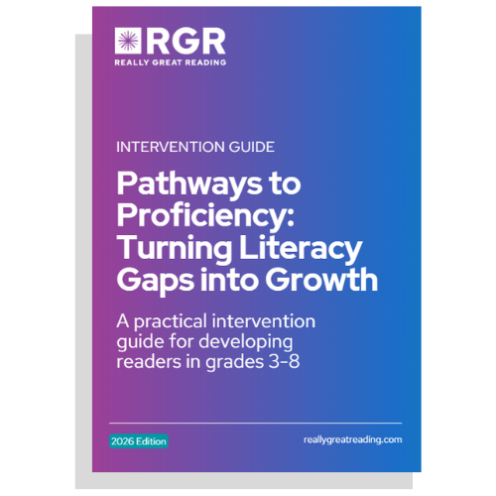
FREE GRADES 3–8 INTERVENTION GUIDE
Pathways to Proficiency gives elementary and middle school leaders a practical framework for identifying student needs, matching intervention to the skill gap, and building responsive intervention groups.
Inside the guide:
- Four developing-reader profiles
- What universal screeners may miss
- A practical placement pathway
- Guidance for Grades 3–5 and 6–8
- A responsive monitoring and regrouping model
Strong literacy implementation depends on more than the program itself. RGR helps Virginia divisions build the knowledge, routines, and systems needed to support students across Tiers 1–3 and turn adoption into sustained student growth.

Identify the skills students need and establish targeted intervention groups.
Give educators explicit, usable lessons designed for real school schedules.
Build educator knowledge and confidence through aligned training and support.
Monitor progress, adjust placement, and keep implementation focused on student outcomes.
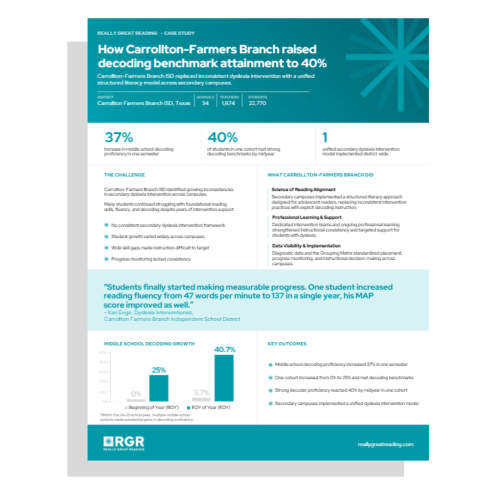
Carrollton-Farmers Branch ISD switched to structured literacy for older learners, raising secondary dyslexia decoding benchmarks from 2% to 40% by midyear.
The challenge: Inconsistent secondary dyslexia practices and limited alignment for older learners across campuses.
The approach: RGR's Reading Intervention for Grades 6-12, with standardized placement and progress monitoring across all secondary campuses.
The result: One middle school cohort grew from 3.7% to 40.7% strong decoders in a single year.

As VALLSS screening identifies more students who need support, Virginia divisions need practical solutions that help educators turn screening data into effective instruction, implement evidence-based literacy practices consistently, and demonstrate meaningful progress over time.
From Kindergarten onward, Really Great Reading combines research-backed instructional programs, trusted professional learning, and practical classroom resources to help divisions build a more consistent approach across Tiers 1–3, without adding unnecessary complexity for teachers.

Anell partners with Virginia school divisions to turn screening data into effective instruction. Whether you're reviewing your latest VALLSS results, strengthening Tier 1 instruction, expanding Tier 2 and Tier 3 intervention, or looking to create greater consistency across your literacy approach, she'll help you identify the right next step for your division.
Is Really Great Reading approved by the Virginia Department of Education (VDOE)?
Yes. Really Great Reading's K–5 programs are approved by the Virginia Department of Education (VDOE), giving divisions confidence that they meet the state's expectations for evidence-based literacy instruction. Our high-quality instructional materials (HQIM) have also been reviewed and approved by VDOE.
How does Really Great Reading support the Virginia Literacy Act?
Really Great Reading helps Virginia divisions put the goals of the Virginia Literacy Act into practice through explicit, evidence-based instruction grounded in the Science of Reading. Our assessment, intervention, instructional materials, and professional learning help educators deliver consistent literacy instruction, support students identified through universal screening, and build lasting teacher capacity.
Can Really Great Reading be used after VALLSS screening?
Absolutely. VALLSS helps schools identify students who may be at risk for reading difficulties. Really Great Reading provides the evidence-based instructional next step by helping educators interpret screening results, group students based on instructional need, and deliver targeted intervention that addresses foundational reading skill gaps.
Does Really Great Reading support upper elementary literacy?
Yes. Many Virginia divisions have made significant progress in K–2 and are now focused on students in Grades 3–5 who continue to struggle with foundational reading skills. Really Great Reading provides teacher-led intervention that helps educators address those persistent gaps while strengthening reading fluency and comprehension.
What professional learning does Really Great Reading provide?
Successful literacy implementation requires more than great instructional materials. Really Great Reading offers professional learning designed to build teacher confidence, strengthen instructional practice, and support long-term implementation. Whether your division is launching a new initiative or expanding existing literacy supports, our professional learning helps educators deliver evidence-based instruction with confidence from day one.