
Phonological Awareness vs. Phonemic Awareness: What's the Difference?
Phonemic awareness is a component of phonological awareness, yet the two terms are often used interchangeably. Learn how these skills differ, why they matter for reading success, and how they support phonics and decoding instruction.
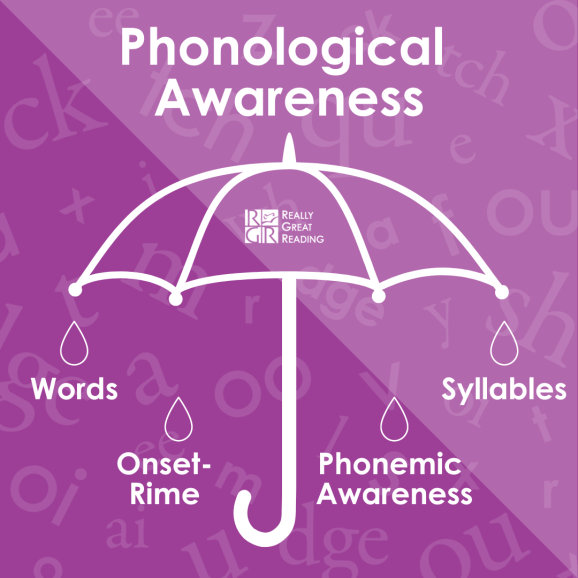
Although the terms are often used interchangeably, phonological awareness and phonemic awareness are not the same skill.
Phonological awareness is the broader ability to recognize and manipulate the sound structures of spoken language. It includes awareness of words, syllables, rhyme, onset-rime patterns, and phonemes.
Phonemic awareness is a subset of phonological awareness that focuses specifically on individual phonemes, the smallest units of sound in spoken words.
| Phonological Awareness | Phonemic Awareness |
|---|---|
| Broad category of sound awareness | Subset of phonological awareness |
| Includes words, syllables, rhyme, onset-rime, and phonemes | Focuses only on phonemes |
| Develops earlier | Develops later |
| Works with larger units of sound | Works with the smallest units of sound |
| Examples include rhyming, syllable segmentation, and word awareness | Examples include blending, segmenting, deleting, and substituting phonemes |
A helpful way to think about the relationship is that all phonemic awareness is phonological awareness, but not all phonological awareness is phonemic awareness. Students typically develop phonological awareness first and then progress toward the more advanced phonemic awareness skills that support decoding and spelling.
Is phonemic awareness the same as phonics?
No. Phonemic awareness involves hearing and manipulating sounds in spoken language, while phonics involves connecting those sounds to letters and letter patterns in print. Phonemic awareness supports phonics instruction, but the two skills are distinct.
Is phonological awareness the same as phonemic awareness?
No. Phonological awareness is the broader category that includes words, syllables, rhyme, onset-rime patterns, and phonemes. Phonemic awareness is one component of phonological awareness that focuses specifically on individual phonemes.
Do students need letters to practice phonemic awareness?
No. Phonemic awareness activities are entirely auditory. Students blend, segment, delete, and manipulate sounds without looking at printed letters or words.
Which skill develops first?
Phonological awareness develops first. Students typically learn to recognize words, syllables, and rhymes before learning to manipulate individual phonemes.
Phonological awareness and phonemic awareness play distinct but connected roles in literacy development. Explore how these skills support reading success.
Phonological awareness and phonemic awareness are closely connected, but understanding their differences can help educators provide more effective instruction. Phonological awareness helps students recognize the larger sound structures within spoken language, while phonemic awareness develops the ability to work with individual sounds.
Together, these skills create the foundation for phonics, decoding, spelling, orthographic mapping, and skilled reading. As students progress from recognizing words, syllables, and rhymes to manipulating individual phonemes, they develop the sound-processing abilities necessary for reading success.
By understanding the relationship between phonological awareness and phonemic awareness, educators can better identify student needs, provide targeted instruction, and support the development of strong foundational literacy skills.
- Phonological awareness is the broad ability to recognize and manipulate the sound structures of spoken language.
- Phonemic awareness is a subset of phonological awareness that focuses specifically on individual phonemes.
- Students typically develop phonological awareness before phonemic awareness, progressing from larger sound units to smaller ones.
- Strong phonemic awareness supports phonics, decoding, spelling, orthographic mapping, and automatic word recognition.
- Together, phonological awareness and phonemic awareness provide the foundation for successful reading development.
Take a deeper dive into phonological awareness, phonemic awareness, decoding, and evidence-based literacy instruction through our complimentary virtual Science of Reading workshops. These interactive, hands-on sessions help educators translate reading research into practical classroom instruction that supports stronger reading, spelling, and literacy outcomes.