
Close the gap between decoding and comprehension
When students reach upper elementary able to decode but not fully understand text, they begin to fall behind. Orbit helps them unlock meaning—and succeed with complex reading.
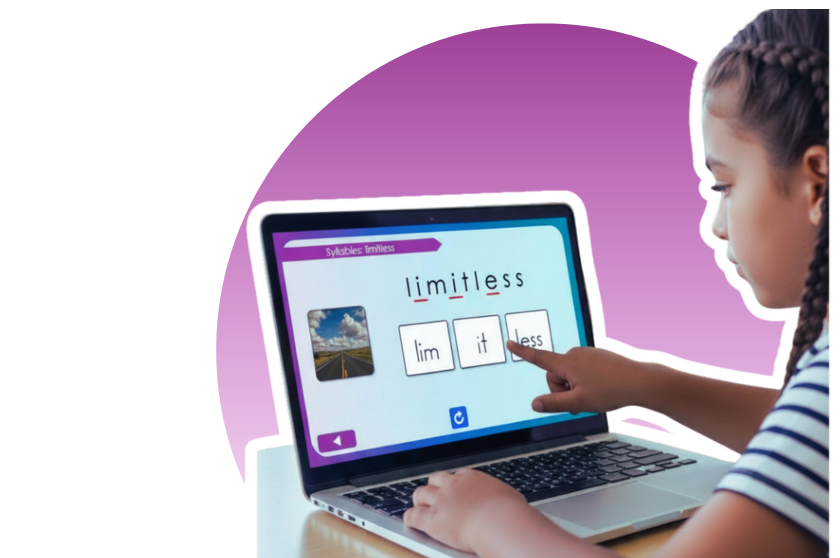
Many students learn to decode—but struggle to understand what they read.
What’s missing is explicit instruction in how words work.
- Students encounter unfamiliar words
- Word structure becomes more important
- Meaning becomes harder to access
- Students stall in upper elementary
- Comprehension breaks down
- Confidence declines
Close the gap from decoding to comprehension with 4 weeks of full access. You’ve seen the research—now see the results.
Orbit teaches students how words work—so they can independently unlock meaning in complex text.
It connects three essential strands:
- Advanced Phonics
Accurate decoding of multisyllabic words - Morphology
Understanding word structure and meaning - Language & Vocabulary
Applying meaning in context
Together, these strands move students from:
word recognition → word meaning → comprehension

Orbit uses a structured, step-by-step sequence to move students from word analysis to full understanding.
The lesson workflow:
🟢 Analyze word structure through guided mapping
🟢 Build meaning through teacher-led modeling
🟢 Apply knowledge in collaborative text reading
🟢 Solidify comprehension through evidence-based discussion
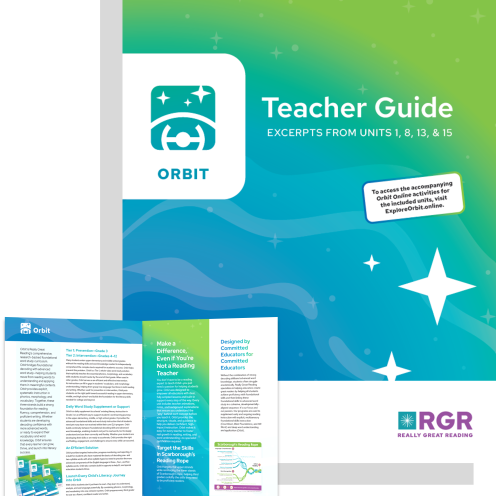
Orbit delivers explicit instruction through routines teachers can use with confidence.
- Daily, structured lessons
- Gradual release: model → guided → independent
- Practice through speaking, writing and discussion
Orbit fits into existing literacy blocks and supports consistent instruction.
- Works within the literacy block
- Supports Tier 1 and Tier 2 instruction
- Replaces fragmented word-level instruction
- Supported by digital tools and professional learning
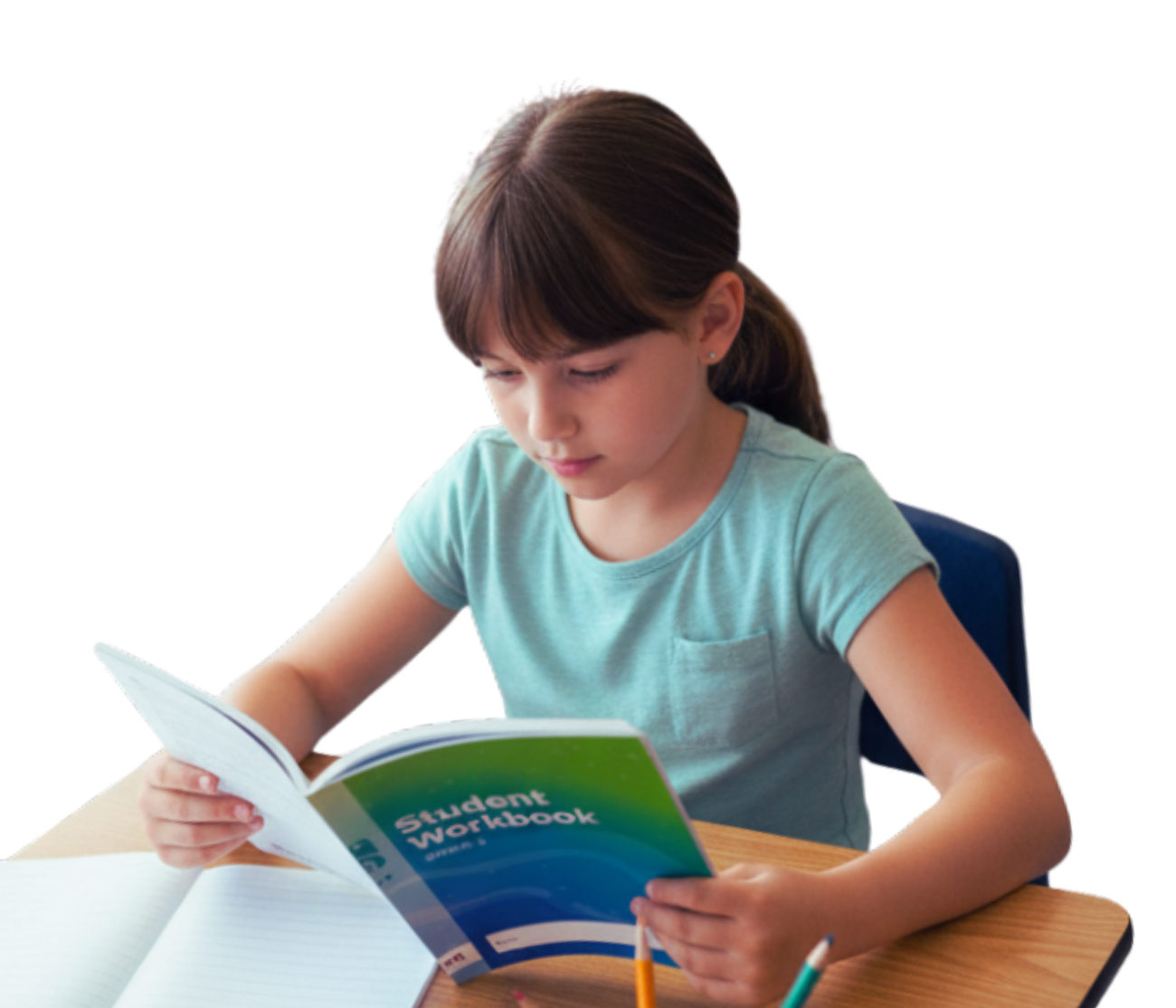
Built for grades 3–8, where reading demands shift from decoding to meaning.
- Grade 3 (Tier 1): Prevent the comprehension drop-off as text complexity increases
- Grades 3–8 (Tier 2): Address persistent gaps in word understanding and meaning
- Ideal for students who can decode but struggle with academic vocabulary and complex text
In upper elementary and secondary grades, fragmented instruction leads to widening gaps in comprehension.
Orbit helps districts:
🟢 Bridge the gap between decoding and comprehension
🟢 Strengthen the impact of existing programs
🟢 Build consistency across classrooms
🟢 Support data-informed instruction
🟢 Improve outcomes in upper grades
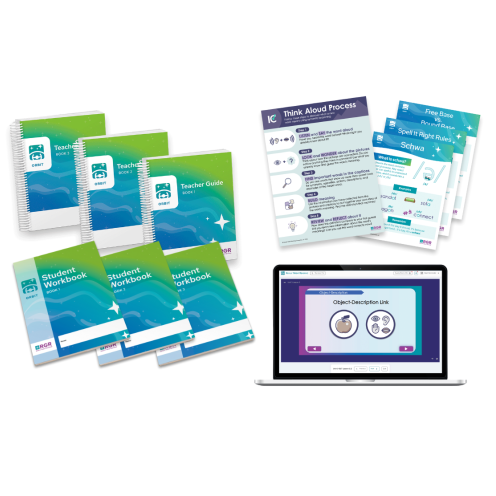
If you’d like to explore how Orbit could support your students, we’d be glad to connect.
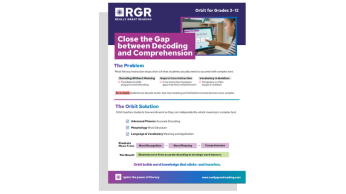
A quick look at how Orbit connects word reading to comprehension. See how aligned instruction drives stronger, more consistent outcomes.

Close the gap from decoding to comprehension with 4 weeks of full access. Launch a trial to experience how Orbit transforms word study into deep understanding.
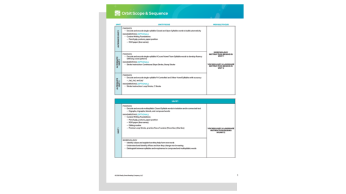
See how skills build from phonics to morphology, vocabulary, and language in a clear progression. Designed to move students from accurate reading to real understanding.


What instructional problem does Orbit solve?
Orbit bridges the gap between decoding instruction and reading comprehension for students in grades 3-12. It supports students who can decode single-syllable words but struggle with multisyllabic words, vocabulary knowledge, and academic language required for content-area reading. Ultimately, Orbit helps students build the language and comprehension skills they need to succeed across all subject areas.
Why is Orbit needed today?
Many students reach a literacy plateau around or after third grade. At this point, they can often decode accurately and read fluently, but they are not fully understanding what they read. As texts become more language-heavy and academically complex, comprehension begins to break down.
This challenge becomes even more visible in upper elementary, middle school, and beyond, when students are expected to independently access science, social studies, literature, and other content-rich texts filled with unfamiliar academic language. While many students may appear to be strong readers on the surface, they often struggle to explain, analyze, or apply meaning from what they read.
As a result, academic progress can stall, confidence declines, and reading becomes a barrier to learning rather than a tool for it. For secondary students especially, these gaps often go unnoticed until they are asked to work with complex texts across subjects.
Recent national data reinforces the urgency of this issue, including a recent (May 2026) Stanford analysis highlighting declining reading achievement over the past decade, particularly as reading demands increase. At the same time, many intervention systems are still primarily focused on foundational decoding, even though the breakdown for older students is often now happening at the level of vocabulary, language structure, and comprehension.
That gap between decoding and understanding is exactly the challenge Orbit was developed to address.
Which students is Orbit designed for?
Orbit is used as a Tier 1 prevention program for Grade 3 and as a Tier 2 intervention for students in Grades 3–12. It is ideal for students who have mastered single-syllable decoding but need support with multisyllabic words and reading fluency.
Older students in particular are often able to decode words, but that’s not the main barrier anymore: the bigger challenge is language. Upper elementary and secondary texts are often dense and rely heavily on academic and domain-specific vocabulary. Success in middle and high school is less about basic phonics and more about comprehension of complex language structures.
Many students missed explicit instruction in morphology, so they struggle to break down and understand longer, multisyllabic academic words. This creates persistent gaps that don’t resolve with traditional remediation. They need targeted, efficient support that builds meaning-making skills quickly, and that is the exact gap Orbit was designed to fill.
How much instructional time does Orbit require?
Orbit is designed for efficiency and flexibility. The direct, teacher-led routines fit into a 20–30 minute daily block, providing high-impact instruction that respects the busy schedules of both teachers and students.
How does Orbit support reading comprehension?
Orbit by Really Great Reading targets the two primary drivers of comprehension: strong decoding and robust language skills. By integrating phonics, morphological analysis, and language instruction, Orbit ensures students can decode complex words while building the background knowledge necessary to understand deep, complex text across subject areas.
How is Orbit different from traditional vocabulary instruction?
Orbit does not teach vocabulary as isolated word lists. Instead, it teaches vocabulary as a structured system of word formation and meaning, using morphology, semantic relationships, and repeated contextual exposure across reading, writing, and discussion.
What specific skills are taught in the curriculum?
Orbit provides explicit, systematic instruction in three key areas:
Advanced Phonics: Mastering multisyllabic word reading
Morphology: Analyzing prefixes, roots, and suffixes
Language & Vocabulary: Building deep word knowledge through thematic groupings
How are the lessons structured across a module?
The program is structured into six thematic modules. A typical 4-week unit cycle includes:
Vocabulary: Twice a week
Phonics or Morphology: Three times a week (alternating weeks)
Integrated Writing: Embedded throughout the curriculum
What engaging themes do students explore?
To keep older students motivated, Orbit uses age-appropriate, content-rich themes such as Agriculture, Exploration, Snacks Around the World, Folktales, Nature & Well-Being, and Light.
Does Orbit include digital tools for students?
Yes. With Orbit, students have access to the Reading Arcade, a digital, game-based platform for independent practice. They also use InferCabulary, a visual tool that uses semantic reasoning to help students deeply understand word relationships and meanings. Independent student practice is always skill-specific and time-bound, and offers educators the real-time data and insights they need to adjust instruction and meet the needs of each student.
How does Orbit support academic language development?
Orbit explicitly teaches academic language through:
Sentence frames and structured oral language practice
Semantic relationship mapping (part-whole, category-example, synonym-antonym)
Structured writing tasks using target vocabulary
Oral discourse routines that require complete sentence responses
How does the program support Multilingual Learners (EL)?
Orbit includes a "comprehension boost" feature for teachers, providing additional imagery, examples, and videos to support multilingual learners. Additionally, templated language frames are used to reduce cognitive load, making it easier for students who are learning the English language to participate in oral discussions.
Are there tools for tracking student progress?
Teachers have access to a real-time data dashboard which allows them to see exactly where a student may be struggling, whether it is a word recognition problem or a meaning problem, so they can provide immediate, targeted support.
What instructional outcomes does Orbit target?
RGR’s Orbit targets the development of advanced literacy skills that help students access and understand complex academic text, including:
Automatic recognition of multisyllabic words through orthographic mapping
Stronger word analysis skills for decoding and determining meaning
Increased academic vocabulary depth and flexibility across contexts
Improved reading fluency and comprehension of complex text
Stronger oral and written expression through sentence-level language practice
Greater independence in applying word analysis strategies during reading
Increased confidence and engagement with academic content
Together, these outcomes support fluent, accurate reading of complex words and deeper understanding of grade-level material across subjects.