
The Literacy Trajectory
CEO Perspectives from Karl Rectanus
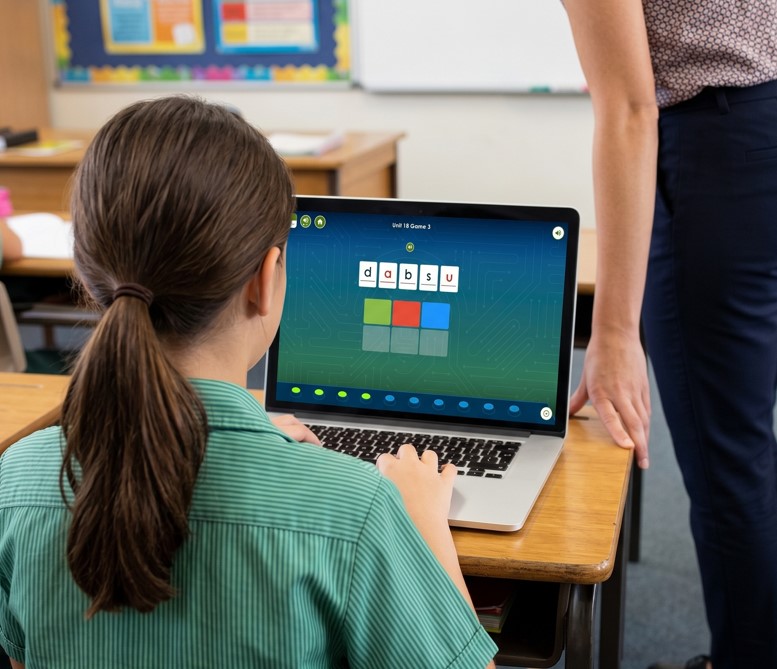
Schools have more usage data than ever. The question that matters, and the one worth paying for, is whether it adds up to student growth.
By Karl Rectanus
CEO, Really Great Reading
Subscribe to The Reading Roadmap
Get Karl’s perspectives delivered to your inbox.
For most of a decade, my job was counting. At LearnPlatform, we could show a superintendent every digital tool running in their district, who opened it, and how often. The number was always bigger than anyone guessed. It still is. Now, Instructure’s 2026 EdTech Top 40 puts the average district at 3,001 digital tools available.
Here’s what all that counting taught me: A login tells you that a product was opened. It can’t tell you whether a child can read. That gap is why we built rapid-cycle evaluation into our work, so district leaders could find out whether the tools they paid for actually improved outcomes. It's also why I lead Really Great Reading, an education outcomes company.
I kept coming back to that last week in New York, on an EdTech Week panel with Molly Henschel of Instructure, Erin Mote of InnovateEDU, Mora Segal of A-Street, and Mark Schwarz, superintendent of Ridgewood Public Schools in New Jersey. Our topic was why the next dollar in this sector should go to evidence. I agree. I also think evidence is where the work starts.
"The question isn't how many days of professional learning a provider offers. It's how much it takes to change what happens in the classroom."
The report behind our session, the 2026 EdTech Evidence Report from Instructure and InnovateEDU, looked at 150 of the most-used technologies in K–12 classrooms. Among tools built for education, 40 percent had research that met any of the four evidence levels in the Every Student Succeeds Act. Among the consumer tools that end up in classrooms anyway, 2 percent did.
Meanwhile, limits on screen time are spreading from state to state and budgets are tight. Families and school boards are asking a fair question: Is any of this helping?
Molly and Erin are right to push all of us to close the literacy gap, and it doesn’t take a fortune to begin. Start with a logic model: what you expect to change, for whom, and why. Then compare students who used the product with students who didn’t. Then keep going.
Even a strong study describes the past: what a product did somewhere else, for other students, often in an earlier version. With AI changing products every few months, that distance keeps growing. It’s why I’ve argued for years for faster cycles: smaller studies, run more often, inside the districts doing the work.
So when I think about stronger evidence, I think about evidence that sits closer to the student in front of you: this district, this year, these kids. Ask a superintendent whether she’d rather see a stack of studies from districts that look something like hers, or results for her own students by spring. I know which one she picks.
Researchers set the standard, and they should. But the people who have to trust the evidence are a teacher deciding what earns a place in her reading block, a school business officer signing the contract, and a parent wondering what’s on that screen.
They trust what they can see in their own students. And they trust a partner with something at stake.
That was the question I took on the panel: What happens when payment depends on student results? South Bend, Indiana has an answer, and the district’s Bo Yan has written about it publicly. The district’s middle school literacy contract with Really Great Reading, the education outcomes company I lead, sets expectations for dosage, attendance, and staffing. It ties 40 percent of the contract’s value to students reaching proficiency on the state’s 2027 English language arts assessment.
The first year is a learning year. We don’t have results to report yet, and Harvard’s Center for Education Policy Research is studying the work in Indiana. We do have one goal that the district and the provider answer for together.
Inputs are what a provider delivers: licenses, logins, days of training. Outcomes are what changes for educators and students. This shift toward measurable student results is at the heart of the Education Outcomes Movement.
Ask the first question, and you get a number. Ask the second, and then ask what happens for students afterward, and you’re in a different conversation, one about building teachers’ capacity and watching results compound.
Molly closed by asking each of us for one step a provider could take tomorrow. Here’s mine: Write down the one student outcome you’d be willing to be paid for. Then sit down with a district and work out what it would take to get there together.
Count what gets used. Answer for what gets learned.
What happens when student outcomes guide decisions about evidence, implementation, and investment? See how district and state leaders are putting measurable student results at the center of education decisions.
Karl Rectanus is CEO of Really Great Reading (RGR), an impact-centered leader driving measurable literacy outcomes for all students. An entrepreneur and advisor, he previously co-founded and led LearnPlatform, pioneering rapid-cycle evaluation and evidence-based decision-making in K-12 education.
He writes The Literacy Trajectory, a series exploring how educators and school systems can improve literacy outcomes at scale.