
AI in Schools? Most are Asking the Wrong Question.
The Literacy Trajectory
CEO Perspectives from Karl Rectanus
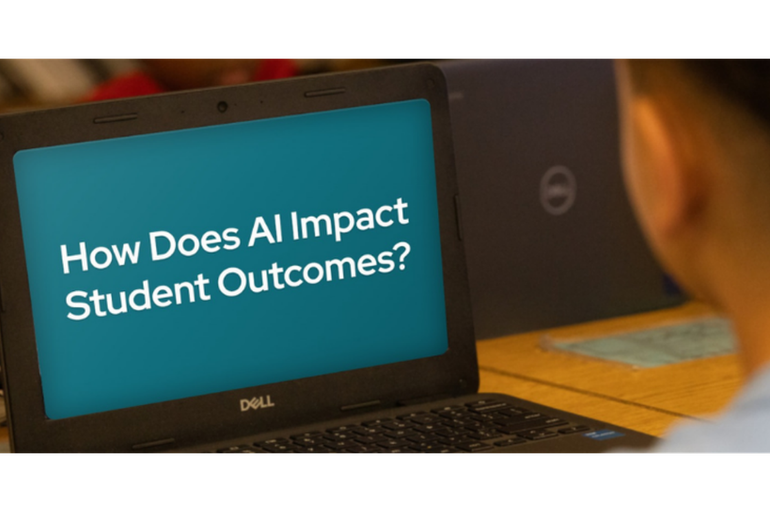
States and districts across the country are activating technology policies affecting over 1 million students so far. Why focus on inputs, when we can finally focus on outcomes?
By Karl Rectanus
CEO, Really Great Reading
Subscribe to The Reading Roadmap
Get Karl’s perspectives delivered to your inbox.
The school year opened with a wave of decisions about technology in classrooms, including generative AI. At least 45 states had screen time limitation legislation in consideration this year. While New York City made the news as it paused student-facing generative AI through eighth grade, and Los Angeles blocked stand-alone AI tools in every grade, Florida went a different direction. Last week, the FL State Board of Education adopted binding rules that require AI policies and encourage use, while also giving parents rights to require alternatives.
These different approaches from different states have mostly collapsed into two paths forward, but grounded in the same mistake. In one, leaders feel they are protecting children from big tech and an industry that treats classrooms as a market. In the other, leaders worry a generation is being cut off from a world-defining tool. Both camps are confident. However, former Education Secretary Arne Duncan was asked on CNN this month what role AI should play in classrooms. His answer is right: nobody really knows yet. With 15,000 school districts in the country, he said, the idea of each one figuring it out alone is "ludicrous."
So, in a world we cannot predict, with technology moving at a pace that we can’t slow down, what does good policy look like?
Alas, the answer isn’t to legislate inputs – the time on the screen or who gets access – because these things will change, technology will advance, and the tools and uses are as different as the children and teachers who use them. We all know that 15 minutes with a graphing calculator program, let alone a powerful diagnostic to identify dyslexia, is not the same as any amount of time on social media. And, at a time when we’re debating if and how AI should be regulated in the world, how can we write policies that keep pace with children, families and teachers.
Our single best path forward – and the best policy – will focus on outcomes. We do now and always will want better outcomes for students, teachers, schools and communities. That will never change. What is different now is that technology, learning science, and our systems are finally at a place to make a focus on outcomes real. We believe the winners will be those who have policies that enable this new reality for students and teachers.
"If we focus on outcomes — and equip and empower the people delivering them — the AI in Schools question largely answers itself."
In 1997, I became the CFO for a set of K8 charter schools the first year they were initiated in North Carolina. The vision of charter schools at the time was to release regulatory requirements to incubate innovations that could then be shared with districts; much like a laboratory might come up with medicines, then expand distribution out to the field. Most people familiar with education know now that vision wasn’t supported by the policy, technology, systems or realities of school districts we “worked with” (they thought we were “stealing their kids” and “their” money) nor the State, which didn’t have systems set up nor knew which regulations we could or couldn’t opt out of. This wasn’t one person’s fault, it was a function of a system that wanted “good things to happen”, but was set up to “avoid bad things” and couldn’t move at pace. Those are two different goals.
Before and since my time in that seat, our US education policy has oscillated its priorities between standards, accountability, and local control. And, while the policy arguments shifted, technology has been advancing at a pace that policy and people often cannot.
Now, many leaders are starting to recognize, we are entering a new era. These shifts and advances are coalescing to create a new reality, an Education Outcomes Movement – a natural progression to move from just avoiding bad things to helping make the good things happen.
You’ve probably heard a bit about this in the conversations of technology and schools:
- The US Department of Education’s recent Dear Colleague Letter providing guidance to States and Districts to focus on purposeful technology mentions outcomes 11 times, citing examples from across the country.
- New purchasing approaches, like Outcomes Based Contracts, that no longer require payments up front for “inputs” (like books, licenses, and hours of professional development), but encourage providers and districts to truly partner with large portions of payments only due when agreed-upon outcomes are delivered. The Center for Outcomes Based Contracting (OBC) is working with 6 states and 87 jurisdictions outlining the 5 domains to make these contracts work best.
- Evidence requirements in state and district purchasing have never been greater, along with rapid cycle evaluations, randomized controlled studies, and broader evaluations in the field from basic curriculum to AI to OBCs themselves (from the likes of EdReports, WestEd and Harvard).
This Outcomes Movement is a profound shift. OBCs are useful – critical even – but they are not enough on their own to systematize outcomes. To move from pockets of excellence to systems of achievement, our policies, practices, and yes, even our products, must ensure outcomes drive everything.
That is the standard we are building to at RGR. We are rethinking and updating everything for this new reality. Over the coming months, I’ll share more about this journey, and all it takes to be an education outcomes organization.
Today, I can share two things about the journey. This fall, RGR will introduce the first ever Literacy Outcomes System (LitOS™, for short) with educators and student outcomes at the center. Built for “the now” and for “next”, I’m looking forward to sharing more about this unique, human-centered approach that builds on decades of learning science and collaboration with leaders also committed to this burgeoning Outcomes Movement.
Today we announced our collaboration with one of those other leaders, the Learning Commons’ Knowledge Graph – an open, public infrastructure that ensures AI tools truly reflect the science behind student learning; this is a critical component of the LitOS and grounds our system in evidence from day one. This type of shared public resource is how a field moves forward together, and stops requiring 15,000 districts to figure this out alone.
Policies that support, advance, and reward key outcomes are the litmus test that won’t age. Are educators prepped, ready and confident? The learning science shows outcomes will follow. Are students learning the skills needed to read, but also the reading skills to learn? If so, failing NAEP scores won’t be the only thing that goes up – so will math scores, scientific knowledge, earning potential, student retention, educator satisfaction, and financial security for districts and states!
For AI – or any technology – to earn its place in any classroom, it has to be grounded in learning science, not improvised by a general-purpose model, and work in concert to best deliver outcomes. Sec. Duncan put the stakes plainly: if AI can accelerate learning for the kids furthest behind, jump at it; if it is hurting them, protect them from it. The only way to know which applies to a given tool is to measure it and put money behind the answer; leaders can write policies that let them act on it in real-time. A ban and a mandate are both choices made about inputs, at a time when we can finally have outcomes drive everything.
If we focus on outcomes — and equip and empower the people delivering them — the AI in Schools question largely answers itself. And our children, schools and communities will be better for it!
If you’d like to explore how RGR could support your students, we’d be glad to connect.
Karl Rectanus is CEO of Really Great Reading (RGR), an impact-centered leader driving measurable literacy outcomes for all students. An entrepreneur and advisor, he previously co-founded and led LearnPlatform, pioneering rapid-cycle evaluation and evidence-based decision-making in K-12 education.
He writes The Literacy Trajectory, a series exploring how educators and school systems can improve literacy outcomes at scale.