
Florida Reading Intervention for Elementary and Middle School Leaders
Help students in Grades K–8 close decoding, fluency, vocabulary, and comprehension gaps with evidence-based intervention that helps Florida schools move from screening to targeted instruction and measurable growth.
Florida-aligned instruction, third-party evidence, professional learning, and practical implementation support.

Screening identifies which students may need support. RGR helps schools determine why they are struggling, match them to the right instructional pathway, and implement intervention consistently.
RGR helps leaders:
- Identify the skills students have not yet mastered
- Place students into targeted Grades 3–8 intervention
- Monitor progress and adjust support over time
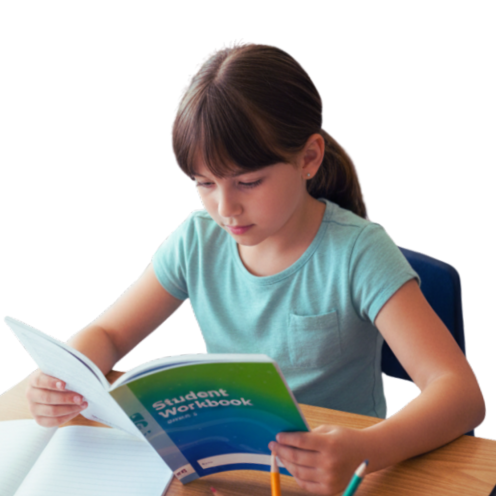
Students with similar screening scores may have very different needs. Some struggle with decoding. Others read accurately but lack fluency, vocabulary, or comprehension. RGR helps Florida school and district teams identify the underlying skill gap and connect students to more precise, targeted intervention.
Look beyond composite scores to determine whether students need support with decoding, fluency, comprehension, or multiple areas.
Place students into instruction aligned to the specific barrier limiting access to grade-level text.
Use progress data to regroup students as their skills grow and needs change.
RGR is approved for Florida’s K–3 ELA Intervention List for Grades 1–3.
Support students based on the skills they need—not simply their grade level or screening score.
For students who need explicit support with decoding, multisyllabic words, advanced phonics, and fluency.
For students who can read many words but struggle with vocabulary, morphology, sentence meaning, and complex text.
Age-respectful instruction for older students who need support with decoding, fluency, vocabulary, morphology, and comprehension.
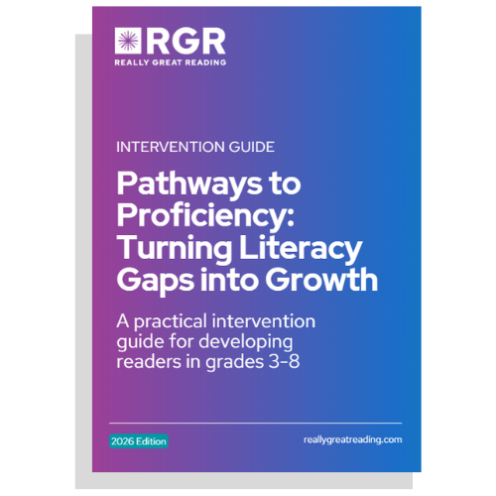
FREE GRADES 3–8 INTERVENTION GUIDE
Pathways to Proficiency gives elementary and middle school leaders a practical framework for identifying student needs, matching intervention to the skill gap, and building responsive intervention groups.
Inside the guide:
- Recognize four developing-reader profiles
- See what broad screening scores may miss
- Match instruction to decoding, fluency, and comprehension needs
- Strengthen placement, progress monitoring, and regrouping
*For school and district literacy, MTSS, curriculum, and intervention teams. The guide covers diagnostic follow-up, four distinct reader profiles, placement decisions, fluid grouping, and different considerations for Grades 3–5 and Grades 6–8.
Florida leaders are being asked to accelerate reading growth while maintaining alignment to the Science of Reading, B.E.S.T. Standards, MTSS expectations, CERP requirements, FAST progress-monitoring conversations, and support for students with exceptional needs and English learners. The challenge is not simply finding another program. It is finding an intervention partner that helps teachers act quickly, consistently, and confidently.
Strong intervention depends on more than the program itself. RGR helps schools and districts build the knowledge, routines, and systems needed to turn adoption into sustained student growth.

Identify the skills students need and establish targeted intervention groups.
Give educators explicit, usable lessons designed for real school schedules.
Build educator knowledge and confidence through aligned training and support.
Monitor progress, adjust placement, and keep implementation focused on student outcomes.

Talk with Megan Hartman about your grade bands, screening results, current intervention model, and implementation goals.
She can help your team identify the right pathway for elementary and middle school students and determine the best next step for your school or district.
Is RGR approved for Florida intervention use?
Yes. Really Great Reading has been approved for inclusion on Florida’s K–3 ELA Intervention List for Grades 1–3. RGR programs support foundational literacy skills including phonological awareness, phonics, decoding, fluency, vocabulary, and comprehension through explicit, systematic instruction aligned to the Science of Reading and Florida’s B.E.S.T. Standards.
Which grade levels does RGR support in Florida?
RGR provides intervention pathways for elementary and middle school students, including targeted support for Grades 3–5 and Grades 6–8. RGR also offers approved K–3 intervention solutions.
How does RGR determine which intervention a student needs?
RGR helps teams look beyond broad screening scores to identify whether students need support with decoding, fluency, language comprehension, or multiple areas.
Can RGR support students who are several years below grade level?
Yes. RGR provides explicit, systematic, and age-respectful instruction for students with persistent foundational and comprehension gaps.
Does RGR support students with dyslexia or ESE needs?
Yes. RGR’s structured instructional routines support students with dyslexia, ESE needs, and other persistent reading difficulties.
What implementation support is available?
RGR offers professional learning, placement support, progress-monitoring guidance, and ongoing implementation assistance.
Can RGR be implemented in one school or across a district?
Yes. Schools can begin with a targeted implementation, and districts can scale RGR across grade bands, campuses, and intervention settings.