
Prince George’s County Maryland Case Study
Closing Early Literacy Gaps with Targeted Intervention
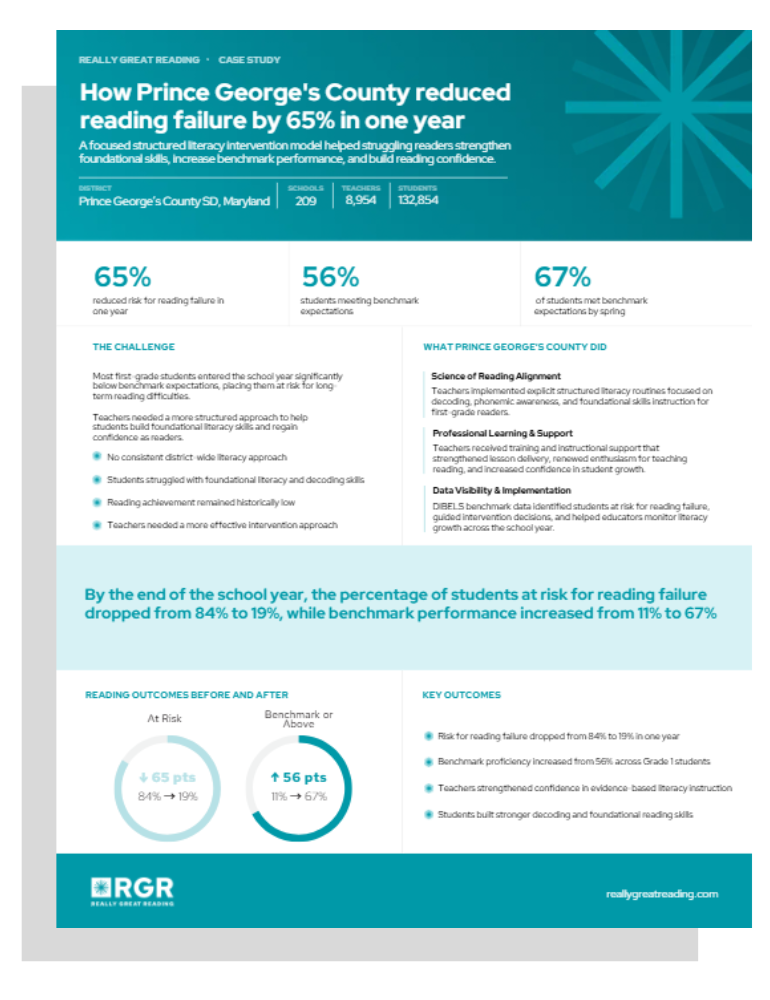
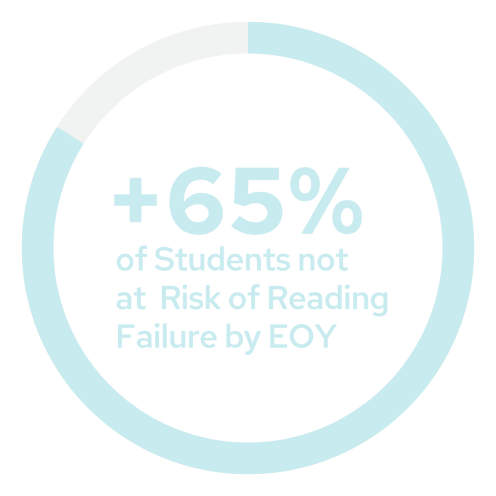
How Prince George’s County Reduced Reading Failure Risk by 65% in One School Year
Structured literacy intervention strengthened foundational reading skills and benchmark performance for first-grade students.
In partnership with RGR, Prince George’s County Public Schools strengthened structured literacy intervention to reduce reading failure risk and improve benchmark performance for first-grade students.
- Prince George’s County, Maryland
- 132,854 Students
- 9,374 Teachers
- 650 Administrators
- 119 Elementary Schools
- 24 Middle Schools
- 24 High Schools
- 42 Academy, Charter, Specialty Schools
- 60% Socioeconomically Disadvantaged
- 11% Special Education
At-risk readers at a Maryland Elementary School made dramatic progress in just one school year with RGR's 1st Grade Reading Program.
Many first-grade students entered the school year significantly below benchmark expectations, placing them at risk for long-term reading difficulties.
Teachers needed a more structured and consistent approach to foundational reading instruction that could strengthen decoding skills, improve benchmark performance, and rebuild student confidence as readers.
District leaders also needed clearer literacy data to identify students at risk for reading failure and monitor intervention effectiveness across the school year.
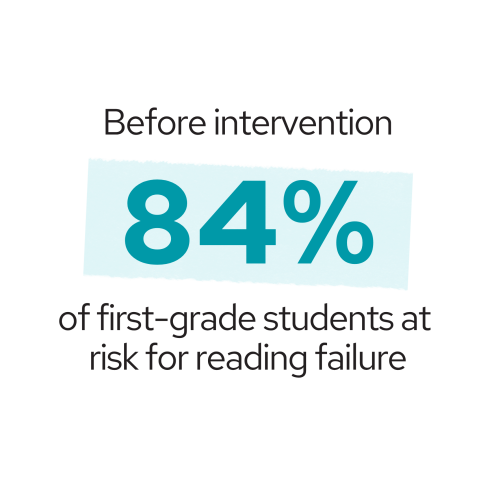
By the end of the school year, Prince George’s County reduced the percentage of first-grade students at risk for reading failure from 84% to 19% through structured literacy intervention and consistent foundational reading instruction.
Teachers used explicit literacy routines, targeted intervention, and data-informed instruction to strengthen decoding skills and improve early reading outcomes across classrooms.
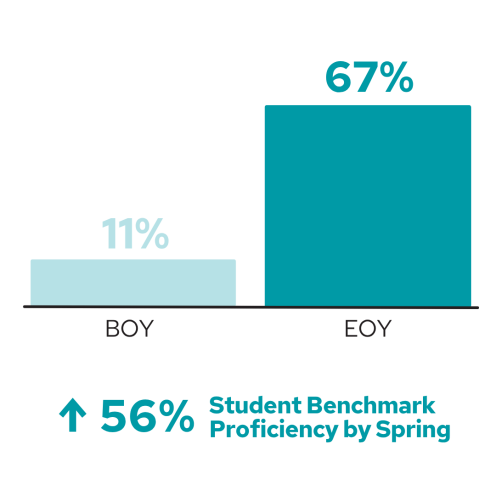
Benchmark reading proficiency increased from 11% to 67% across first-grade students after educators implemented structured literacy intervention and consistent foundational reading instruction.
Students strengthened decoding and foundational reading skills while teachers implemented more consistent literacy instruction across classrooms.
Teachers implemented structured literacy routines focused on decoding, phonemic awareness, and foundational reading instruction for first-grade students.
Teachers received training and instructional support that strengthened literacy instruction, improved lesson delivery, and increased confidence in student reading growth.
DIBELS benchmark data helped educators identify students at risk for reading failure, guide intervention decisions, and monitor literacy growth across the school year.
See How Districts Like Prince George’s County Public Schools are Driving Measurable Literacy Growth