
The Literacy Trajectory
The Literacy Trajectory
CEO Perspectives from Karl Rectanus

States across the country are restricting or pausing AI usage with over 1 million students impacted so far. How will this guidance affect student outcomes?
By Karl Rectanus
CEO, Really Great Reading
Subscribe to The Reading Roadmap
Get Karl’s perspectives delivered to your inbox.
The school year opened with a wave of decisions about AI in classrooms. New York City paused student-facing generative AI through eighth grade. Los Angeles Unified blocked stand-alone AI tools in every grade. Last week, Florida went in a different direction. Its State Board of Education adopted binding rules that keep AI in schools but require districts to tell parents which tools are in use, give families an alternative, and judge education technology on demonstrated learning outcomes, not screen time.
Former Education Secretary Arne Duncan was asked in a CNN interview this month what role AI should play in classrooms. His answer is the one that is left out: nobody really knows yet. With around 15,000 school districts in the country, he said, the idea of each one figuring it out alone is "ludicrous."
Both camps – and most of the hot takes – are debating an input. Neither is asking what matters to a third grader who is not yet reading, or a fifth grader who is struggling, or a teacher who is balancing the needs of 150+ students. The question of focus should be, what will help get the best student outcomes?
The school year opened with a wave of decisions about AI in classrooms. New York City paused student-facing generative AI through eighth grade. Los Angeles Unified blocked stand-alone AI tools in every grade. Last week, Florida went in a different direction. Its State Board of Education adopted binding rules that keep AI in schools but require districts to tell parents which tools are in use, give families an alternative, and judge education technology on demonstrated learning outcomes, not screen time.
Former Education Secretary Arne Duncan was asked in a CNN interview this month what role AI should play in classrooms. His answer is the one that is left out: nobody really knows yet. With around 15,000 school districts in the country, he said, the idea of each one figuring it out alone is "ludicrous."
Both camps – and most of the hot takes – are debating an input. Neither is asking what matters to a third grader who is not yet reading, or a fifth grader who is struggling, or a teacher who is balancing the needs of 150+ students. The question of focus should be, what will help get the best student outcomes?
The drop in literacy numbers is startling, and Duncan raised them himself in a segment that was supposed to be about AI. As Chalkbeat reported in August, about half of New York City's students in grades 3–8 are proficient in reading, down six points in a year, with third grade down fourteen. Roughly 42 percent of Black students and 37 percent of Latino students are reading at grade level, against about 67 percent of white and Asian American students. That followed a seven-point rise, and the experts who advise the state say neither swing is likely as large as it appears.
Set aside the cause. Four years into the most ambitious Science of Reading overhaul in the country, America’s largest district cannot say with confidence whether more of its children learned to read last year. If measurement is that unsettled, we can't answer whether AI works on today’s terms. Ban it or mandate it, and we would still not know. That problem predates any chatbot.
"Nobody should get paid for a child who doesn't learn to read. Build that system, and the AI question largely answers itself."
Duncan’s answer is a national research function that evaluates what works, fast. He is right, but federal priorities turn over with every administration, and districts cannot wait on Washington. As Chris Cerf, former New Jersey commissioner of education and Newark superintendent (and an RGR board member), has argued, the most reliable place to put accountability is the contract itself. Outcomes-based contracting ties a meaningful share of a solution provider's payment to whether students reach agreed, independently measured learning goals. Not logins. Not minutes. Whether a child who could not decode in September can decode in May.
The question in the district office becomes not “should we allow this tool?” but “will you stand behind it?” A product that cannot clear that bar does not belong in front of an eight-year-old. A product that can does not need a moratorium. It needs a contract tied to measurable learning gains.
Early implementations are promising; the rigorous evidence is still being built, including ongoing research at Harvard’s Center for Education Policy Research.
For AI to earn its place in any classroom, it has to be grounded in learning science, not improvised by a general-purpose model. Someone other than the company selling it has to measure it. And the solution provider has to be paid for driving measurable learning gains.
That is the standard we are building to at RGR. This fall we will introduce LitOS™, our Literacy Outcomes System, designed to learn continuously from evidence of student progress, with educators at the center. Today we announced our collaboration with Learning Commons’ Knowledge Graph, an open, public infrastructure that ensures AI tools truly reflect the science behind student learning; this is a core component of LitOS and grounds our system in evidence from day one. This type of shared resource is how a field moves from pockets of excellence to systems of achievement, and how 15,000 districts stop figuring this out alone.
Duncan put the stakes plainly: if AI can accelerate learning for the kids furthest behind, jump at it; if it is hurting them, protect them from it. The only way to know which applies to a given tool is to measure it and put money behind the answer. A ban and a mandate are both choices made without it.
If you’d like to explore how RGR could support your students, we’d be glad to connect.
Karl Rectanus is CEO of Really Great Reading (RGR), an impact-centered leader driving measurable literacy outcomes for all students. An entrepreneur and advisor, he previously co-founded and led LearnPlatform, pioneering rapid-cycle evaluation and evidence-based decision-making in K-12 education.
He writes The Literacy Trajectory, a series exploring how educators and school systems can improve literacy outcomes at scale.

States across the country are restricting or pausing AI usage with over 1 million students impacted so far. How will this guidance affect student outcomes?
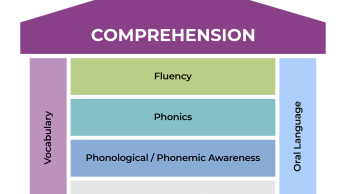
Districts have adopted the Science of Reading, yet outcomes remain uneven. Learn why consistent instruction is the next phase.

The implementation gap explains why literacy outcomes vary across classrooms. Learn how inconsistent instruction impacts reading success.

Students are reading more accurately than they have in years. Many still struggle to understand what they read.
Strong reading foundations change the entire trajectory of a child's life, and we are not yet doing enough, at scale, to get every child there. As CEO of Really Great Reading, find out what RGR is doing to help change the trajectory of US literacy.