
Research Supports RGR's Diagnostic Decoding Surveys
Knowing that a student is struggling with reading is only part of the picture. Educators also need to understand why. Our Diagnostic Decoding Surveys help identify decoding strengths, instructional needs, and skill gaps that can inform instruction, intervention, grouping, and MTSS planning. Here is what the research says about the instructional value, validity, and reliability of Diagnostic Decoding Surveys.
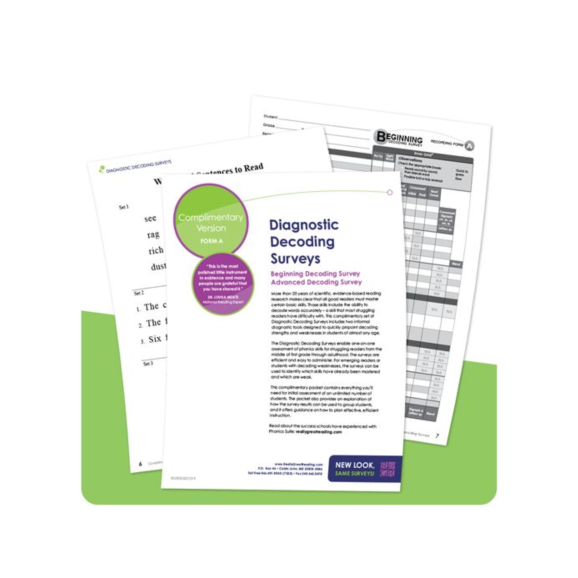
Universal screening, benchmark assessments, and progress monitoring tools help educators identify students who may need additional support. Those data sources are important pieces of a strong literacy system.
Two students may perform similarly on a screening measure for very different instructional reasons. One student may struggle with phonics patterns. Another may need support with multisyllabic decoding. Another may demonstrate strengths in some word-reading skills while showing significant gaps in others. Those distinctions matter because instructional decisions become stronger when educators have clearer information about underlying skill needs.
Our Diagnostic Decoding Surveys help educators take a closer look at decoding performance, enabling more targeted, responsive, and actionable instructional planning across classrooms, intervention settings, and MTSS systems.
Research supporting Diagnostic Decoding Surveys provides important evidence for educators seeking assessment tools that are both instructionally useful and technically sound.
Researchers from the Center for Reading at Pittsburg State University evaluated Diagnostic Decoding Surveys to examine their validity and reliability as measures of decoding performance. The findings supported the surveys' ability to provide consistent, meaningful information about student decoding skills and instructional needs.
Assessment tools influence instructional planning, intervention design, grouping decisions, and conversations about student support. Research validation helps strengthen confidence that an assessment measures what it is intended to measure and produces dependable information that educators can use in practice.
Literacy expert Dr. Louisa Moats has also recognized the instructional value of Diagnostic Decoding Surveys, noting their usefulness in identifying specific decoding difficulties and in guiding instructional decision-making.
Together, these findings reinforce an important principle of effective assessment. Diagnostic data is most powerful when it helps educators move from identifying reading difficulties to understanding the instructional needs behind them.
"This is the most polished little instrument in existence and many people are grateful that you have shared it."
Diagnostic Decoding Surveys are designed to help educators examine decoding and word-reading skills more closely. Rather than producing a single broad reading score, decoding-focused assessment can help illuminate patterns within student performance.
Depending on the assessment form and instructional context, educators may gather information related to:
- phonics and sound-symbol relationships
- word reading accuracy
- decoding patterns
- multisyllabic word reading
- instructional strengths and gaps
This type of information can help educators move beyond generalized intervention decisions toward more precise instructional planning.
Effective literacy instruction begins with understanding student needs. Explore assessment tools and resources that help educators make informed instructional decisions.
Instructional planning becomes more targeted when educators understand the skills that may be contributing to reading difficulty.
Diagnostic decoding data can support:
- small group placement
- intervention planning
- instructional targeting
- MTSS implementation
- dyslexia support conversations
- progress monitoring efforts
It can also help schools avoid a one-size-fits-all approach to intervention.
Two students may both struggle with reading while requiring very different instructional responses. More precise diagnostic information helps educators make stronger decisions about what to teach, how to group students, and where instructional time may have the greatest impact.
For district leaders, diagnostic assessment data can also contribute to broader conversations about instructional alignment, intervention systems, and literacy implementation.
Diagnostic Decoding Surveys can support a variety of instructional contexts.
Teachers may use diagnostic information to strengthen classroom instruction and small group planning.
Interventionists and literacy specialists may use assessment results to guide targeted intervention decisions and monitor student progress over time.
District leaders and MTSS teams may use diagnostic data to support conversations about instructional alignment, intervention systems, and literacy outcomes across schools or grade levels.
Multiple survey forms can also support both initial diagnostic assessment and ongoing instructional decision-making.
Knowing that a student is struggling with reading is an important starting point. Understanding the instructional factors contributing to that struggle can make assessment data significantly more useful. Research supporting Diagnostic Decoding Surveys reinforces their value as tools for examining decoding performance, identifying instructional strengths and gaps, and helping educators connect assessment results to instructional decisions.
For schools working to strengthen foundational skills instruction, intervention systems, and MTSS implementation, diagnostic decoding data can support more targeted conversations about:
- what skills need instructional attention
- how students may be grouped for support
- which intervention pathways may be appropriate
- where instructional time and resources may have the greatest impact
When assessment data helps educators move from broad reading concerns toward clearer instructional next steps, it becomes more than a measurement tool. It becomes part of a stronger literacy decision-making process.
- Reading scores do not always explain why a student is struggling.
- Diagnostic Decoding Surveys help identify decoding strengths and skill gaps.
- Research supports the validity, reliability, and instructional usefulness of Diagnostic Decoding Surveys.
- Diagnostic data can inform instruction, intervention, MTSS, and dyslexia support.
- Strong diagnostic assessment supports clearer instructional decisions.
See how researchers evaluated Diagnostic Decoding Surveys and what the findings suggest about using diagnostic decoding data to support instructional planning, intervention, and literacy decision-making.
What are Really Great Reading’s Diagnostic Decoding Surveys?
Really Great Reading’s Diagnostic Decoding Surveys are assessments designed to help educators examine decoding and word reading skills in greater detail. The surveys provide information about decoding strengths, instructional needs, and skill gaps that can help guide literacy instruction, intervention planning, grouping decisions, and MTSS implementation.
Why are diagnostic decoding assessments important?
Diagnostic decoding assessments help educators move beyond broad reading scores to better understand why a student may be struggling with reading. That information can support instructional planning, intervention decisions, MTSS implementation, dyslexia support, and targeted literacy instruction.
What do Really Great Reading’s Diagnostic Decoding Surveys measure?
Really Great Reading’s Diagnostic Decoding Surveys examine decoding-related skills that may include phonics and sound-symbol relationships, word reading accuracy, decoding patterns, multisyllabic word reading, and instructional strengths and skill gaps
These insights can help educators make more informed instructional decisions.
How are Really Great Reading’s Diagnostic Decoding Surveys used in schools?
Schools may use Really Great Reading’s Diagnostic Decoding Surveys to support classroom instruction, small group formation, intervention planning, MTSS implementation, dyslexia support conversations, and progress monitoring efforts
Teachers, interventionists, literacy specialists, and district leaders may use diagnostic data to strengthen instructional planning and student support.
What research supports Really Great Reading’s Diagnostic Decoding Surveys?
Researchers from the Center for Reading at Pittsburg State University evaluated Really Great Reading’s Diagnostic Decoding Surveys for validity and reliability as measures of decoding performance. Findings supported their ability to provide consistent, meaningful information about student decoding skills and instructional needs.
How do Really Great Reading’s Diagnostic Decoding Surveys support instructional decision making?
Really Great Reading’s Diagnostic Decoding Surveys are designed to help educators connect assessment results to instructional action. By identifying specific decoding strengths and skill gaps, educators can make more targeted decisions about instruction, grouping, intervention, and literacy support.