
How to Build an Effective Early Literacy Program
Early literacy plays a critical role in preventing reading struggles from becoming long-term challenges. Research shows that students are more likely to become successful readers when schools provide explicit instruction in foundational literacy skills, identify learning needs early, and deliver targeted support when students need it.
So what should an effective early literacy program include?
From oral language and phonemic awareness to assessment, small-group instruction, and family engagement, these ten components help schools build strong literacy foundations and support long-term reading success.
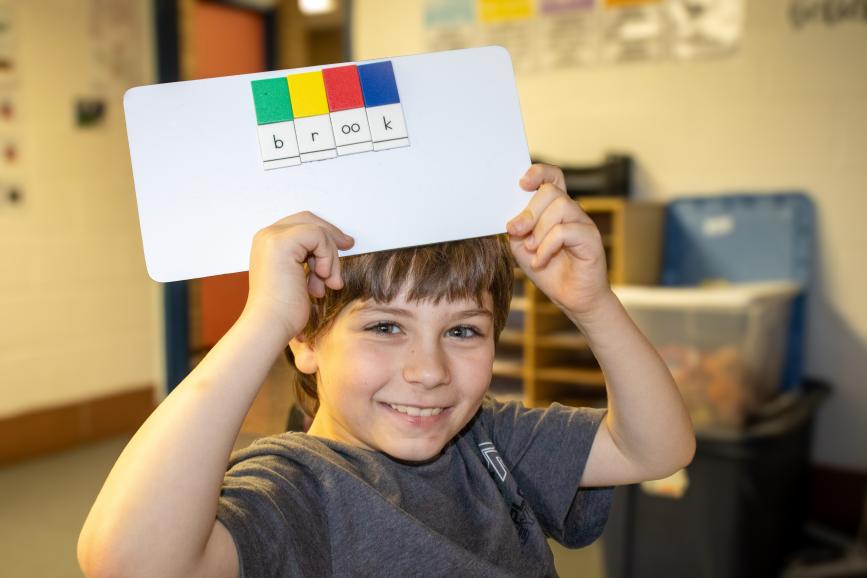
An early literacy program is a coordinated approach to helping young children develop the skills needed for reading and writing success. Effective programs focus on oral language, phonological awareness, phonemic awareness, phonics, vocabulary, comprehension, and writing while providing educators with the tools and data needed to support every learner.
The strongest early literacy programs are preventative rather than reactive. They identify reading challenges early and provide targeted instruction before students experience significant reading difficulties.
Strong early literacy programs develop oral language alongside foundational reading skills. Classroom conversations, interactive read-alouds, storytelling, and vocabulary instruction help students build the language knowledge needed for reading comprehension, writing, and academic learning.
Oral language supports far more than communication. It helps students understand increasingly complex ideas, participate in discussions, follow directions, and connect spoken language to written language. These experiences strengthen vocabulary, background knowledge, and language comprehension, all of which contribute to reading success.
Schools that intentionally prioritize oral language create a stronger foundation for literacy development long before students encounter increasingly complex texts.
Effective literacy instruction starts with knowledgeable educators. Teachers make hundreds, if not thousands, of instructional decisions every day, and those decisions have the greatest impact when they are grounded in an understanding of how reading develops.
Professional learning should help educators understand phonological awareness, phonemic awareness, the alphabetic principle, phonics, decoding, and encoding. Teachers also need opportunities to connect research to classroom practice through modeling, coaching, and ongoing support.
Districts that invest in ongoing professional learning build stronger literacy systems. While one-time professional development can introduce new concepts, educators benefit most from sustained learning that includes multiple touchpoints, opportunities for practice, and ongoing support. When teachers understand how foundational skills develop and how those skills support reading success, they can identify student needs earlier and provide more effective instruction.
Foundational Literacy
Designed for PK-3 classrooms, our Science of Reading-based solutions provide systematic instruction to ignite orthographic mapping and build strong foundational literacy skills.
Strong literacy systems intentionally develop phonological and phonemic awareness before expecting students to become proficient readers. Students typically begin by recognizing larger units of sound such as words, syllables, rhyme, and onset-rime patterns before progressing to individual phonemes.
As students learn to blend, segment, and manipulate sounds, they develop the awareness needed to connect spoken language to print. These skills support phonics, decoding, spelling, orthographic mapping, and automatic word recognition.
Research consistently identifies phonemic awareness as one of the strongest predictors of future reading success. Schools that prioritize phonological and phonemic awareness in the early grades provide students with a critical foundation for reading development and reduce the likelihood that students will struggle with decoding later on.
Strong early literacy programs use assessment data to move beyond identifying struggling readers and toward understanding why students are struggling. Effective assessments provide actionable information about phonological awareness, phonemic awareness, letter-sound knowledge, decoding, and other foundational skills.
When educators can pinpoint specific skill gaps, they can provide targeted support before small challenges become larger barriers to reading success. Assessment data also helps schools monitor progress, evaluate instruction, and determine when additional intervention may be needed.
Within an MTSS framework, assessment data supports informed decision-making across tiers of instruction. Schools can use data to group students strategically, provide targeted intervention, and ensure that support matches individual student needs.
Small-group instruction allows educators to respond to student needs with greater precision. When teachers group students based on assessment data, they can focus instruction on specific skills such as phonemic awareness, decoding, fluency, or word reading rather than delivering the same support to every student.
Students who need additional support often benefit from increased opportunities to practice new skills with immediate feedback and teacher guidance. Small-group instruction also allows educators to adjust pacing, provide additional modeling, and address misconceptions in real time. Check out our Grouping Matrix to take the guesswork out of forming small groups.
When combined with strong assessment practices, small-group instruction becomes an important layer of prevention. Schools can address skill gaps earlier, increase instructional intensity when needed, and help more students stay on track toward reading proficiency.
Students benefit when literacy instruction builds consistently from one grade level to the next. Foundational skills develop over time, and each year of instruction should build on the knowledge and skills students acquired previously.
Research consistently identifies phonological awareness, phonemic awareness, letter-sound knowledge, and phonics as strong predictors of future reading achievement. Schools that align literacy instruction across preschool, kindergarten, first grade, and second grade create a more coherent pathway toward reading proficiency.
Strong alignment extends beyond the curriculum. Educators across grade levels should share a common understanding of instructional practices, student expectations, assessment data, and intervention pathways. When literacy instruction is coordinated vertically, teachers spend less time reteaching missed skills and more time helping students move forward.
Districts that prioritize alignment create a more consistent experience for students and educators alike. This continuity helps prevent instructional gaps, supports smoother transitions between grade levels, and ensures that foundational skills continue to build toward fluent reading and long-term literacy success.
Families play an important role in helping students develop literacy skills. Strong early literacy programs create meaningful connections between school and home by helping families understand instructional goals and ways they can support learning outside the classroom.
Schools can strengthen these partnerships by communicating clearly about what students are learning, why foundational skills matter, and how families can reinforce those skills through everyday interactions. Reading together, discussing stories, practicing letter sounds, and engaging in conversation all contribute to literacy development.
Family engagement does not require parents or caregivers to become reading experts. Small, consistent interactions can help reinforce classroom learning and build confidence in young readers. When families understand how reading develops and what skills students are working toward, they become valuable partners in the literacy journey.
Districts that prioritize family engagement create stronger connections between instruction at school and learning at home. These partnerships help students receive consistent support, increase opportunities for practice, and strengthen long-term literacy outcomes.
Strong literacy systems create opportunities for all students to develop foundational reading skills. This includes multilingual learners, students with dyslexia, students receiving intervention services, and students who may require additional instructional support.
Effective instruction begins with the understanding that students may arrive with different experiences, strengths, and learning needs. Educators can support diverse learners through explicit instruction, appropriate scaffolds, targeted intervention, and ongoing progress monitoring while maintaining high expectations for student growth.
As an example: “Instruction that provides substantial coverage in the key components of reading—identified by the National Reading Panel (NRP) (NICHD, 2000) as phonemic awareness, phonics, fluency, vocabulary, and text comprehension—has clear benefits for language-minority students. Focusing on these key components of reading has a positive influence on the literacy development of language-minority students, just as it does for native English speakers” (August & Shanahan, 2006).
Evidence-based literacy instruction benefits a wide range of learners. Explicit teaching of phonological awareness, phonics, decoding, vocabulary, and language comprehension provides the structure many students need while creating access points for those who may require additional support.
Schools that build inclusive literacy systems ensure that more students have access to the instruction necessary for reading success. When educators provide targeted support while maintaining a shared commitment to strong foundational skills instruction, more learners can develop the knowledge and confidence needed to become successful readers.
The Science of Reading provides educators with decades of research about how students learn to read and which instructional practices support literacy development most effectively. Strong early literacy programs use this research to guide instructional decisions, professional learning, assessment practices, and intervention planning.
Effective instruction includes explicit teaching in phonological awareness, phonemic awareness, phonics, decoding, vocabulary, fluency, and comprehension. These skills work together to support accurate word reading, language comprehension, and overall reading proficiency.
Aligning instruction to the Science of Reading goes beyond adopting new materials or introducing isolated initiatives. Schools must create systems that support consistent implementation, provide educators with ongoing professional learning, and ensure that instructional practices align with the research.
Districts that take a comprehensive approach to implementation create stronger conditions for prevention. By teaching foundational skills systematically and intentionally, schools can help more students develop the skills needed to become successful readers while reducing the need for later intervention.
"Phonemic awareness is what allows us to anchor the sounds in a word to the written sequence of letters that represent those sounds".
High-quality instructional materials help schools translate reading research into daily classroom practice. Strong materials provide a systematic progression of skills, clear instructional routines, meaningful practice opportunities, and resources that support both students and educators.
Effective programs teach phonological awareness, phonemic awareness, phonics, decoding, encoding, and the alphabetic principle while providing opportunities for students to apply new learning through reading and writing. Materials should help educators deliver instruction consistently while supporting the diverse needs of students across classrooms and schools.
The strongest instructional materials do more than teach individual skills. They connect assessment, instruction, practice, and progress monitoring into a cohesive literacy system that supports both prevention and intervention.
RGR's Literacy Suite is built around these principles. Through systematic instruction, embedded assessment, targeted practice, and professional learning, our products help schools create consistent literacy experiences that support reading success from the earliest grades. When districts pair high-quality instructional materials with strong professional learning and consistent implementation, they create the conditions for long-term literacy success. Students receive the support they need to develop accurate word recognition, reading fluency, comprehension, and the confidence to become lifelong readers.
- Strong early literacy programs prevent reading difficulties by building foundational skills before gaps widen
- Oral language, phonological awareness, phonemic awareness, and phonics form the foundation for reading success
- Assessment data and targeted instruction help educators identify student needs early and provide timely support
- Consistent implementation across classrooms, grade levels, and MTSS tiers strengthens literacy outcomes
- High-quality instructional materials, ongoing professional learning, and Science of Reading-aligned practices help schools build sustainable literacy systems
Download our Power of Prevention Infographic