
CDE-Approved Reading Solutions Built for Colorado's READ Act
RGR helps Colorado districts deliver explicit, structured literacy instruction that supports K–3 foundational skills and Tier 2 and Tier 3 intervention through middle school. Designed for use within the READ Act framework and listed on the CDE Advisory List for Reading Intervention, RGR helps educators close persistent reading gaps and improve outcomes across grade levels. Programs can be implemented using CLSD, Early Literacy Grant, and Per-Pupil Intervention Funds.


RGR supports Colorado districts in meeting READ Act requirements and serving SRD learners with proven reading instruction from K–3 foundations through adolescent intervention, including clear pathways from decoding to comprehension across grade levels.
On the CDE Advisory List for Reading Intervention, with foundational instruction designed for Colorado classrooms and full alignment to READ Act evidence standards.
Structured literacy routines that help districts deliver consistent, explicit intervention for students on READ Plans and those identified through SB 25-200 dyslexia screening.
Evidence-based literacy programs that align with CLSD priorities and help districts expand foundational instruction and intervention across elementary and secondary grades.
For upper elementary and adolescent students, reading struggles may persist even after foundational decoding is in place. Orbit helps bridge the gap between word reading and understanding by building the vocabulary, word analysis, and comprehension skills needed to make meaning from grade-level text. See how students move from reading words to stronger comprehension with 4 weeks of access to Orbit.
Colorado leaders are under pressure to improve outcomes while meeting READ Act requirements, implementing SB 25-200 dyslexia screening, supporting READ Plans, and closing persistent K–12 gaps. Many districts are also operating under staffing and resource constraints that require flexible, low-prep intervention solutions. RGR can help.
Even with strong K-3 instruction in place, many students arrive in upper grades with persistent decoding and fluency gaps, and some students on READ Plans for years. Targeted Tier 2 or Tier 3 intervention is what moves them off those plans.
CO’s educators are trained in the Science of Reading under SB 19-199. Now, they need intervention tools that match that training, across K-12. In many districts, limited coaching capacity also increases the need for interventions that are easy to roll out with minimal training.
Districts and BOCES need partners who provide implementation validated by WestEd evaluation, evidence that withstands scrutiny, and outcomes reflected in ELAT data and READ Plan transitions. Leaders are also focused on maximizing literacy funding while driving measurable reading gains.
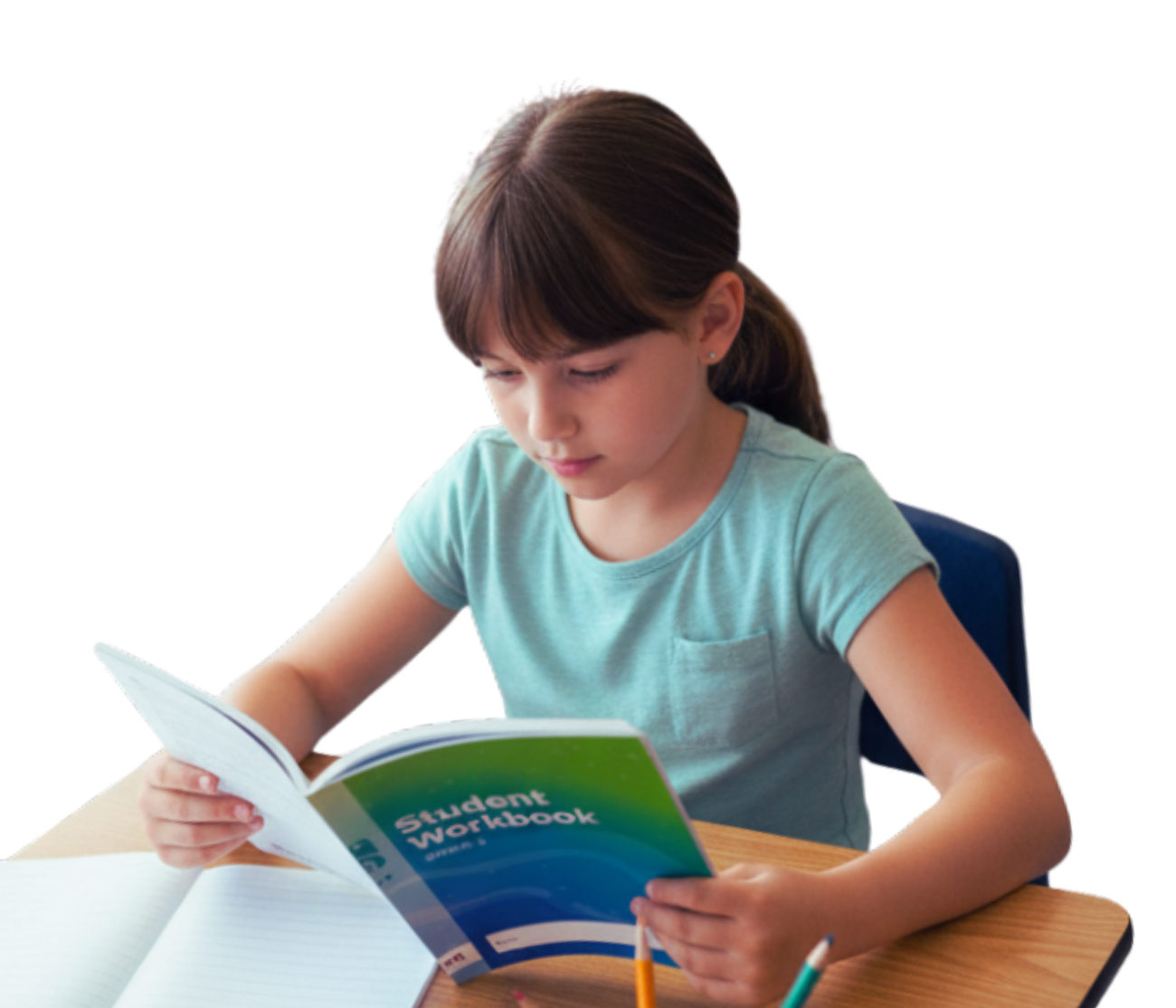
RGR provides structured, explicit, multisensory routines designed to support Colorado's most vulnerable readers, including students identified with SRD and those screened for characteristics of dyslexia. This is especially critical in schools with high percentages of multilingual learners and students receiving intervention. Districts use RGR to deliver consistent intervention across K-12, transition students off READ Plans, and prepare for the 2027-28 full implementation of SB 25-200's expanded dyslexia requirements.
For Colorado kindergarten through grade 3 students, RGR provides explicit phonemic awareness, phonics, decoding, and fluency instruction, aligned to READ Act requirements and approved through the CDE Advisory List. Designed for whole-class instruction and intervention from the earliest grades, and for districts prioritizing early literacy growth and efficient use of READ Act and state literacy funding.
For grades 3–12 students who can decode basic words but struggle with multisyllabic reading and comprehension, RGR provides support beyond early phonics. HD Word builds complex word-reading skills, and Orbit moves students from decoding to understanding complex text, a complement to the foundational programs on the CDE Advisory List.
For secondary students with persistent literacy gaps, RGR provides a structured intervention pathway that builds foundational skills, vocabulary, fluency, and comprehension. Designed specifically for older learners, it combines explicit instruction with engaging, age-appropriate texts to deliver targeted support beyond core instruction and test preparation.
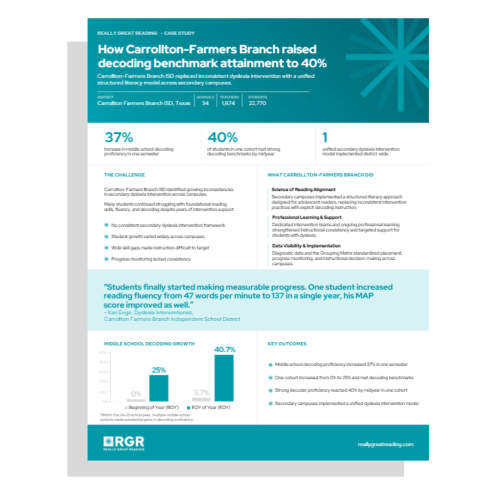
Carrollton-Farmers Branch ISD A Texas district that mirrors what many Colorado districts are working toward: replacing inconsistent secondary intervention with a unified structured literacy approach. The results show up in decoding data and in student confidence.
The challenge:
Secondary dyslexia support varied widely across campuses, with inconsistent instructional practices and limited intervention alignment for older learners.
The approach:
The district implemented RGR's Reading Intervention for Grades 6-12 across all secondary campuses and standardized placement and progress monitoring practices.
The result:
One middle school cohort grew from 3.7% to 40.7% strong decoders in a single year.
RGR’s presence on the CDE Advisory List makes it eligible for Colorado’s primary literacy funding streams, including READ Act Per-Pupil Intervention Funds, Early Literacy Grants, and CLSD awards. This allows districts to invest state-allocated literacy dollars in programs already reviewed for alignment with Colorado’s instructional requirements, supporting efforts to accelerate reading growth for multilingual learners and strengthen Tier 2 and Tier 3 intervention systems.
Grounded in the Science of Reading and backed by independent research and strong EdReports ratings, RGR provides evidence-based reading programs districts can trust. Our materials are also included on Colorado's approved reading lists, helping districts confidently select solutions that align with literacy goals and implementation requirements.
If you'd like to explore how RGR can support your students, we'd be glad to connect.
"[My student] jumped from a 5th grade level to an 11th grade level!
We worked really hard 1:1 this year to practice her reading, comprehension, and decoding of unknown words. She told me how when she got to unknown or difficult words, instead of giving up like it the past, she used the tools she learned. This class is working and I am so excited to see how it will continue to close the gaps for our kids!"
Colorado districts and BOCES are operating under READ Act accountability, WestEd evaluation, and a Science of Reading framework that's been built over more than a decade. RGR is designed to deliver improved reading scores inside that framework.
Compliant intervention that meets the evidence requirements of READ Act Per-Pupil Intervention Funds, with implementation that produces the outcomes WestEd evaluations are measuring.
Structured, multisensory routines for students receiving special education services and students identified with SRD, at every grade level, especially in settings serving multilingual learners and students requiring intensive intervention.
RGR works with regional cooperatives to deliver intervention support using low-prep tools for districts that share PD and curriculum resources, a proven approach for rural and regional districts with shared staffing and grant-funded programs.

What Colorado’s CDE approval of RGR’s K–5 literacy programs means for READ Act instruction, intervention support, and funding access through Per-Pupil Intervention Funds, ELG, and CLSD.
How one district moved adolescent decoding benchmarks from 0-2% to 40% in a single semester by adopting RGR's Reading Intervention for Grades 6-12.

An overview of RGR's Tier 2 and Tier 3 intervention pathways for Colorado districts, BOCES leaders, and educators who support students identified with Significant Reading Deficiency and students screened for characteristics of dyslexia.
Is RGR approved for Colorado READ Act funds?
Yes. RGR is on the CDE Advisory List for intervention, supplemental, and Tier 1 materials, which makes it an eligible purchase for districts using READ Act Per-Pupil Intervention Funds, Early Literacy Grant (ELG), and Comprehensive Literacy State Development (CLSD) grant dollars. Districts deploying these funds for intervention can purchase RGR through standard procurement processes.
Is this only for early elementary?
No. RGR supports literacy from K-12. K-2 Foundational Skills are designed for whole-class instruction in the READ Act's focus grades. Upper elementary and middle school intervention supports older students who still need foundational decoding support and those who need support bridging decoding skills to fluent reading and meaningful comprehension. The adolescent pathway is built specifically for the "silent" 6-12 population that never closed early literacy gaps.
Can RGR support our SRD and dyslexia services?
Yes. RGR's structured literacy routines are built for the kind of explicit, systematic, multisensory instruction students on READ Plans and students screened under SB 25-200 require. Programs like HD Word are designed for older learners who still need foundational support; the K-2 programs work for early intervention. The approach scales across grade levels and meets the evidence requirements Colorado's accountability framework expects.
Can RGR support adolescent readers?
Yes. RGR's adolescent pathway combines HD Word for multisensory decoding, InferCabulary for vocabulary, and Hidden Gems decodable chapter books for age-appropriate fluency. These tools are built for middle and high school students who need foundational support — without the elementary-feel materials that older learners disengage from. Orbit supports older students’ transition from foundational reading skills to independent reading and comprehension of grade-level text. Many districts use RGR within CLSD-funded initiatives and rural literacy improvement grants where staffing constraints require highly structured, low-prep intervention solutions.
Are Really Great Reading’s programs evidence-based and research-backed?
RGR’s programs meet the highest standards for literacy instruction, with near-perfect, all-green EdReports ratings for alignment, usability, and instructional quality. They are recognized by Evidence for ESSA for demonstrated improvements in student literacy outcomes and supported by ESSA Tier II studies showing accelerated student progress. The Reading League found no “red flags” in the skills RGR targets, and Rivet Education includes RGR in its Professional Learning Partner Guide for high-quality educator professional development. Finally, RGR’s K-2 programs have received CDE Advisory List approval.
How does RGR work with our BOCES?
RGR partners with BOCES across Colorado to deliver intervention at scale. Cooperative implementation models work particularly well for low-prep tools, shared professional development, and joint procurement. We can structure pricing and coaching support to fit BOCES-led district consortia.