





All Resources

All Resources

Find Your Resource

Filter by:
Book illustration with different vocabulary words
Vocabulary
Top Five Reasons to Teach Vocabulary
Young people are reading less and failing to build vocabulary amid a sea of text messaging and cyberchat says literacy and child development specialist Professor Tom Nicholson. It goes without saying that the best writers and speakers are often the widest read.
Learn More
A, B, C illustration
Vocabulary
Why Vocabulary Instruction Matters and 8 Strategies That Work
Vocabulary knowledge plays a critical role in reading comprehension, oral language development, and academic success. Effective vocabulary instruction helps students understand new words, make connections between ideas, and apply language across reading, writing, speaking, and listening.
Learn More
Teacher helping student one on one.
Dyslexia
Dyslexia Signs and Symptoms
The signs of dyslexia can look different from one student to another and often change as reading demands increase. Understanding common indicators across age groups can help educators and families identify reading difficulties early and provide appropriate support.
Learn More
Parents with child, speaking with teacher.
Dyslexia
What is Dyslexia?
Dyslexia is one of the most common learning differences, yet misconceptions about it persist. Understanding what dyslexia is, how it affects reading and spelling, and which instructional approaches are most effective can help educators and families provide meaningful support for struggling readers.
Learn More
Three young kids posing for the camera together.
Dyslexia
How Structured Literacy Supports Dyslexia Intervention
Research consistently shows that students with dyslexia benefit from explicit, systematic, and structured literacy instruction. Learn how foundational skills instruction, phonemic awareness, phonics, morphology, fluency, and multisensory learning align with evidence-based dyslexia intervention.
Learn More
Two girls at their desk, writing on index cards.
Science of Reading
5 Key Priorities for Achieving and Sustaining High Literacy Outcomes
Skilled teachers are the cornerstone of effective literacy instruction. By equipping teachers with evidence-based strategies and literacy knowledge rooted in the science, we ensure that they are prepared to foster significant improvements in their students’ reading abilities.
Learn More
dyslexia
Reading Assessments
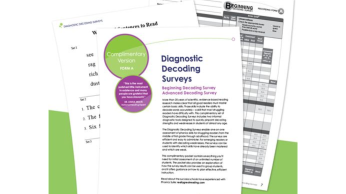
Research Supports RGR's Diagnostic Decoding Surveys
Strong literacy instruction starts with understanding why students struggle to read. Research supporting Diagnostic Decoding Surveys helps educators move beyond broad reading scores toward more targeted instructional decisions.
Learn More
Teacher showing student how to write
Foundational
The Connection Between Oral Language, Reading, and Writing
Oral language does more than support conversation. It helps students develop the vocabulary, language comprehension, and communication skills they need to become successful readers and writers. Understanding the connection between oral language, reading, and writing can help educators strengthen literacy instruction from the earliest grades.
Learn More
Illustration of a man trying to avoid pitfalls
Science of Reading
10 Common Phonics Instruction Pitfalls and Research-Based Solutions
Phonics instruction is a critical component of early literacy, but even well-designed lessons can fall short when common instructional mistakes get in the way. Understanding the most frequent pitfalls in phonics instruction, and the research-based practices that address them, can help educators strengthen decoding, spelling, fluency, and long-term reading success.
Learn More
Wayne-Westland Case study thumbnail
Case Studies
Wayne-Westland Community Schools Case Study
How structured literacy instruction strengthened Tier 1 reading outcomes across PreK–5 classrooms.
Learn More
Woman and young girl practicing oral language.
Foundational
Schwa Sound Explained: Why This Common Vowel Matters in Reading and Spelling
The schwa sound is the most common vowel sound in English and one of the most confusing for students. Discover why it matters for phonics, decoding, spelling, and multisyllabic word reading.
Learn More
Teacher with students in hallway.
Adolescent Literacy
Secondary Literacy Improvement Starts With Stronger Systems of Support
Secondary teachers should not be expected to solve vocabulary and comprehension challenges alone. Explore how district leadership can strengthen secondary literacy by supporting teachers with practical resources, professional learning, instructional coherence, and sustainable systems of support.
Learn More
Home Connection

Really Great Reading’s Home Connection provides families with the necessary tools to reinforce the learning beyond the classroom.

Really Great Reading: Family Engagement Overview

Engaging Learning Videos

Short videos cover key topics like syllables, reading strategies, and decoding longer words.

Helpful Resources

Letter Tile Free Play, Heart Word Magic, and materials for Countdown, Blast, and HD Word align with classroom learning.
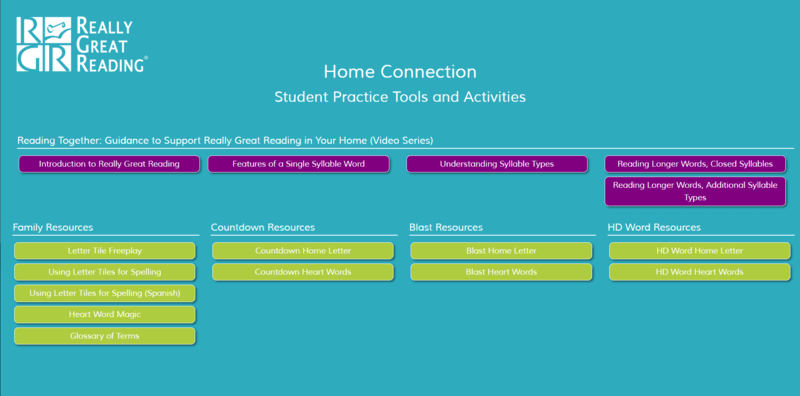
 

Home Connection start screen